
As global aquaculture continues to expand, the demand for high-quality and nutritionally balanced fish feed is increasing rapidly. A modern fish feed production line provides an efficient and reliable solution for producing floating or sinking fish feed with stable quality and high productivity. By integrating advanced processing equipment and intelligent control systems, fish feed manufacturers can improve feed performance while reducing production costs.
This article introduces the structure, working process, advantages, and applications of a complete fish feed production line, helping aquafeed producers choose the right solution for their business.
What Is a Fish Feed Production Line?
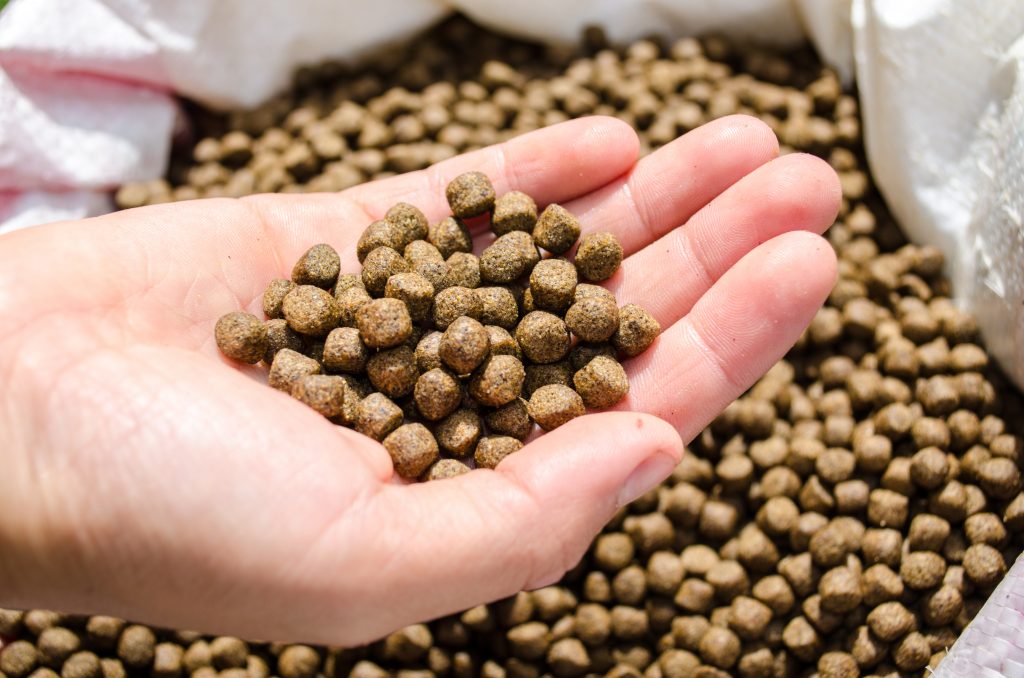
A fish feed production line is a complete set of equipment designed to process raw materials into finished fish feed pellets. It combines crushing, mixing, extrusion or pelletizing, drying, cooling, coating, and packaging into a continuous and automated workflow.
Common long-tail keywords related to this topic include:
- fish feed production line for sale
- complete fish feed production line
- floating fish feed production line
- automatic fish feed production line
These systems are widely used in commercial aquafeed factories and large-scale fish farming operations.
Types of Fish Feed Production Lines
Floating Fish Feed Production Line
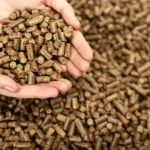
This system uses a floating fish feed extruder machine to produce floating pellets with controlled density. Floating feed is easy to observe during feeding and helps reduce waste in aquaculture ponds.
Sinking Fish Feed Production Line
Designed to produce slow-sinking or sinking feed, suitable for bottom-feeding fish species.
Extruded Fish Feed Production Line
An extruded fish feed production line improves starch gelatinization and protein digestibility, resulting in better feed conversion ratios.
Each complete fish feed production line can be customized according to fish species and feeding habits.
Main Components of a Fish Feed Production Line
A standard fish feed production line includes the following key systems:
Raw Material Crushing System
Hammer mills grind raw materials such as corn, wheat, soybean meal, and fish meal into fine particles suitable for extrusion or pelleting.
Mixing System
High-efficiency mixers ensure uniform distribution of nutrients, additives, oils, and vitamins.
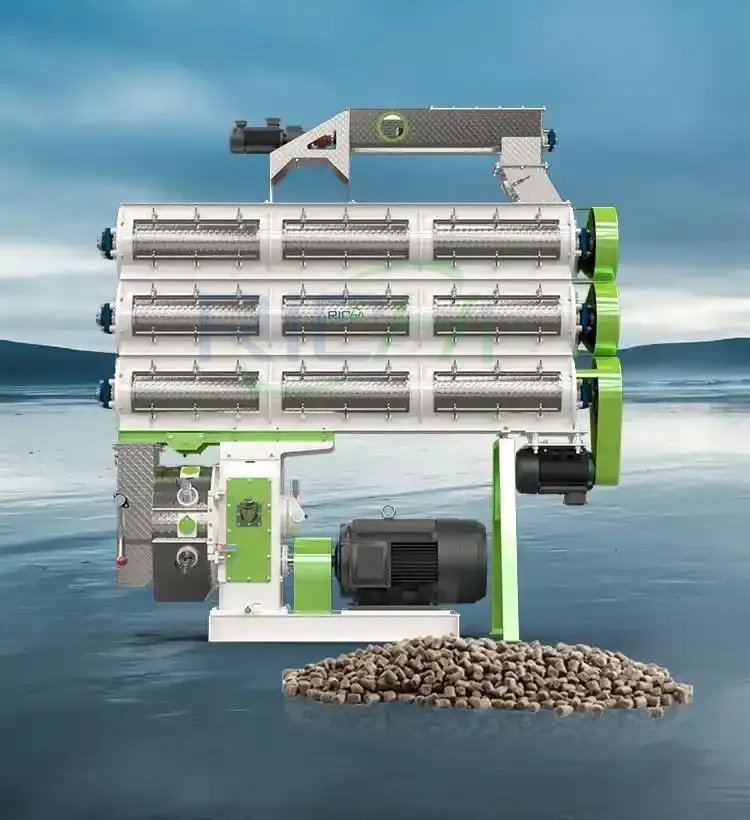
Extrusion or Pelletizing System
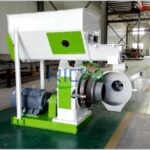
The fish feed extruder or pellet mill forms feed into pellets with adjustable size, density, and buoyancy.
Drying and Cooling System
Dryers and coolers reduce moisture and temperature to improve pellet stability and shelf life.
Coating and Packaging System
Oil spraying and vacuum coating systems enhance feed palatability, followed by automatic weighing and packaging.
(Going Here: https://pelletisingmachine.com/aqua-feed-machine/)
Raw Materials Used in Fish Feed Production
A modern fish feed production line can process a wide variety of ingredients, including:
- Corn, wheat, and rice
- Soybean meal and rapeseed meal
- Fish meal and meat meal
- Fish oil and vitamin premixes
- Mineral additives
This flexibility allows manufacturers to optimize formulations based on cost and nutritional requirements.
Advantages of a Fish Feed Production Line
High Feed Quality
Extrusion technology improves nutrient availability and pellet durability.
Flexible Feed Types
Easily produce floating, slow-sinking, or sinking fish feed.
High Production Efficiency
Automatic fish feed production lines reduce labor costs and ensure stable output.
Customizable Capacity
Fish feed production lines are available from small-scale systems (0.5–1 t/h) to large industrial solutions (10–20 t/h or more).
Intelligent Control
PLC systems monitor temperature, moisture, and output in real time for consistent quality.
Applications in Aquaculture
A fish feed production line is suitable for producing feed for:
- Tilapia
- Catfish
- Carp
- Salmon
- Trout and other aquatic species
With proper configuration, one production line can support multiple feed formulas and fish sizes.
How to Choose the Right Fish Feed Production Line
When selecting a fish feed production line for sale, consider the following factors:
- Target fish species and feeding behavior
- Required production capacity
- Raw material characteristics
- Degree of automation
- After-sales service and technical support
A well-designed system ensures long-term performance and profitability.
Conclusion
A modern fish feed production line is a key investment for aquaculture feed manufacturers aiming to improve feed quality and production efficiency. By integrating extrusion technology, automation, and flexible design, it enables stable production of high-performance fish feed that meets the demands of today’s aquaculture industry.