

A Reliable Line Starts With Process Logic
A sawdust cat litter production line can contain many different machines, but reliability rarely comes from simply adding more equipment.
The most reliable systems are built around logical material flow.
Every stage should answer a specific manufacturing need.
Large particles are reduced.
Moisture is adjusted.
Prepared material is formed.
Fresh product is dried and cooled.
Particles are screened.
Acceptable product is packaged.
Unqualified fractions are recycled or handled separately.
This sequence sounds straightforward, but the details determine whether the line runs smoothly.
1. Define the Product Before Buying Equipment
The first step is to define what the customer will actually buy.
Manufacturers should decide:
- Desired particle size
- Product density
- Target moisture
- Packaging size
- Appearance
- Dust expectations
- Intended market position
For example, a premium retail product may require tighter particle consistency and more careful screening than a bulk industrial product.
The Sawdust Cat Litter Production Equipment should be selected after those targets are defined.
2. Separate Raw-Material Preparation From Final Processing
Many factories make the mistake of assuming that all sawdust can go directly into the forming stage.
In practice, raw material may need:
- Screening
- Magnetic separation
- Size reduction
- Moisture adjustment
- Storage
- Controlled conveying
A properly organized preparation section protects the forming machine from unstable feedstock.
This can improve both productivity and equipment life.
3. Use the Right Milling Strategy
If the incoming material contains larger wood chips, milling becomes an important part of the project.
For example, a 2-3 T/H sawdust hammer mill for sale may be suitable for a project that needs dedicated size reduction before downstream processing.
The selected mill should reflect the incoming material rather than simply the desired final capacity.
Important considerations include:
- Particle size
- Raw-material density
- Feed uniformity
- Required outlet size
- Operating hours
- Dust collection
A well-matched mill should create the right material condition without unnecessarily over-processing the feedstock.
4. Design Storage Around Material Stability
Raw-material storage is often overlooked.
Yet a production line cannot remain stable if the material entering the equipment changes significantly because of poor storage.
A storage area should protect sawdust from:
- Rain
- Excess humidity
- Contamination
- Excessive compaction
- Uncontrolled mixing
Different types of wood residue should also be stored separately when their processing characteristics are significantly different.
5. Build a Controlled Feeding System
A stable feeding system ensures that downstream machines receive material at a consistent rate.
This matters because fluctuating feed rates can create changes in forming pressure, dryer loading and finished-product flow.
A good material-handling system can include:
- Hopper
- Screw conveyor
- Belt conveyor
- Bucket elevator
- Dust collection
- Level sensors
The exact combination depends on the factory layout.
6. Treat Drying as a Production Stage
The dryer should be integrated into the production plan.
It should receive stable material and return stable product.
A reliable system should consider:
- Inlet moisture
- Outlet moisture
- Dryer capacity
- Heat source
- Temperature control
- Airflow
- Exhaust
- Cleaning access
The dryer should have enough flexibility to cope with moderate variations in feed material.
7. Keep Cooling Close to Drying
The physical layout should minimize unnecessary material movement after drying.
Freshly dried litter should move efficiently into the cooling section and then toward final screening.
Long, complicated conveying routes can increase energy use, installation cost and maintenance points.
A compact layout is generally easier to operate and inspect.
8. Screening Is Part of Quality Control
Screening should be considered a quality-control operation rather than simply a finishing step.
The screen separates:
- Acceptable product
- Oversized particles
- Excessive fines
Depending on the process, off-size material may be recycled.
This creates a more uniform final product and can improve overall material utilization.
9. Why Automation Matters
As the production line grows, manual control becomes increasingly difficult.
An integrated control system can monitor:
- Motors
- Feeders
- Dryer operation
- Temperature
- Material flow
- Alarms
- Emergency shutdown
- Interlocks
This does not eliminate operators.
Instead, it gives operators better information and allows problems to be identified faster.
10. Maintenance Should Influence Equipment Selection
A machine that performs well but is difficult to maintain may create unnecessary downtime.
When evaluating equipment, manufacturers should ask:
Can wear parts be replaced easily?
Are inspection doors accessible?
Can the main components be cleaned efficiently?
Is lubrication straightforward?
Are common spare parts available?
A production system should be designed for real-world maintenance, not just initial installation.
11. Safety Must Be Part of the Layout
Sawdust handling creates combustible dust risks, so factories should take dust management and safety seriously.
Good project design should consider:
- Dust extraction
- Housekeeping
- Electrical protection
- Bearing temperature monitoring
- Equipment grounding
- Emergency shutdown
- Proper ventilation
- Safe access for maintenance
The specific safety requirements vary by location and facility, so local industrial standards and engineering requirements should be reviewed during project design.
12. Plan Packaging Before the Line Is Installed
Packaging capacity should match production output.
If the line produces more material than the packaging system can handle, finished product will accumulate and interrupt upstream production.
Packaging planning should include:
- Bag size
- Filling method
- Sealing
- Labeling
- Palletizing
- Finished-product storage
This makes the end of the process as reliable as the beginning.
13. Think About Finished-Product Storage
A production line does not end when the product leaves the screen.
Finished litter may spend days or weeks in storage before shipment.
The storage environment should therefore protect the product from:
- Moisture
- Contamination
- Excessive heat
- Physical damage
Warehouse management can have a direct effect on final product quality.
14. Integrate the Whole System
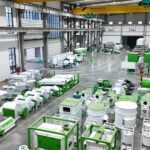
For a new investment, it is often more practical to evaluate the complete process with one engineering team rather than purchasing every machine independently.
A supplier such as Richi Pellet Mill can be assessed based on its ability to coordinate the individual equipment sections and align them with the actual project requirements.
The key is not the brand name alone.
The important question is whether the proposed configuration matches:
Raw material → capacity → product → process → packaging.
15. Build in Room for Future Growth
A good line should support expansion where practical.
For example, the factory may initially operate one forming section but reserve space for an additional machine.
Conveyors, electrical systems and storage areas can also be considered with future production increases in mind.
This approach can reduce the disruption associated with later expansion.
16. Measure What Matters
Reliable production depends on data.
Operators should track:
- Hourly output
- Moisture
- Product temperature
- Particle size
- Fines
- Machine downtime
- Energy consumption
- Material losses
Over time, these records reveal trends that cannot be identified from visual inspection alone.
A change in product quality may be connected to raw-material moisture, dryer loading, forming conditions or screen performance.
Data makes troubleshooting much faster.
17. Reliability Comes From Balance
The strongest production lines are usually balanced rather than dominated by one powerful machine.
A high-capacity forming machine does not solve a drying bottleneck.
A large dryer does not compensate for insufficient raw material.
A fast production line does not help if packaging is too slow.
Every section needs to support the others.
That is the real meaning of production-line engineering.
For further technical references, market information and biomass processing ideas, discover this info here.
Conclusion
A reliable sawdust cat litter line is not defined by how many machines it contains.
It is defined by how well those machines work together.
Good raw-material storage supports stable milling. Stable milling supports consistent forming. Controlled moisture supports drying. Efficient cooling and screening support product quality. Suitable packaging supports the entire commercial operation.
For companies considering sawdust as a new pet-litter material, the best starting point is a clear process design based on actual raw material, target capacity and final-product requirements.
That foundation makes equipment selection more logical, production more predictable and future expansion easier.