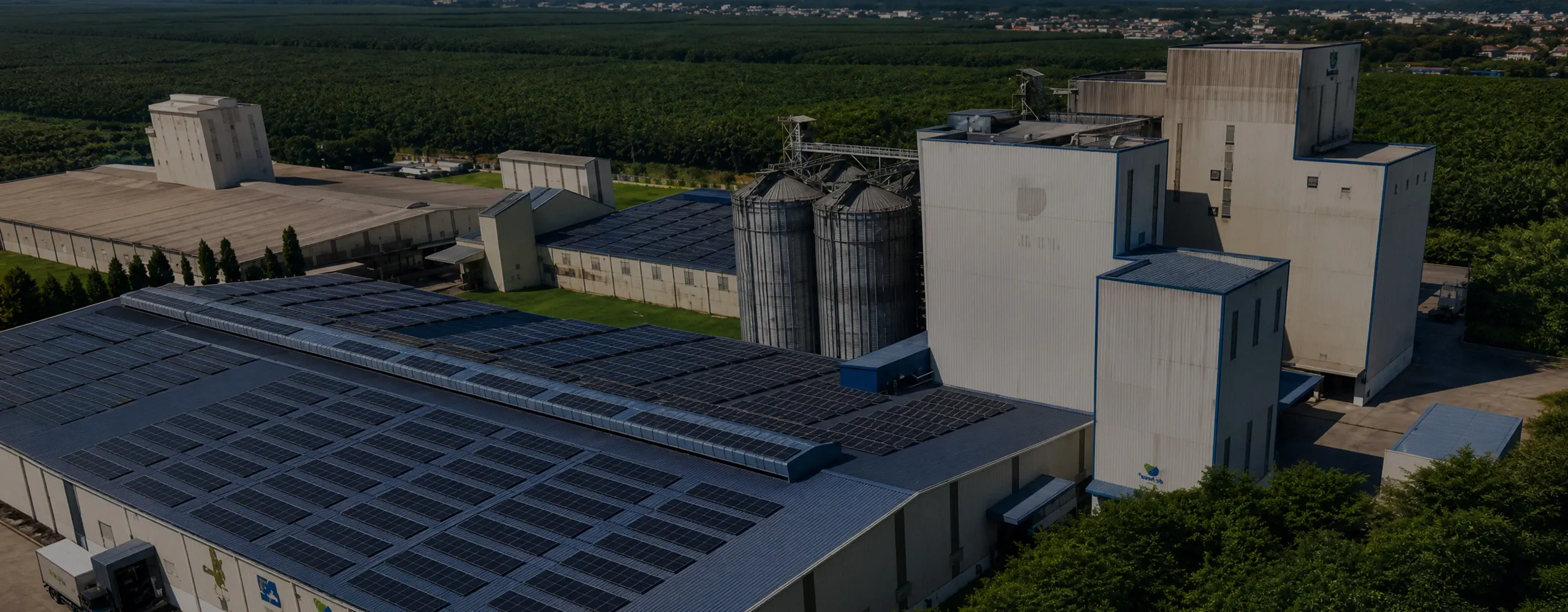


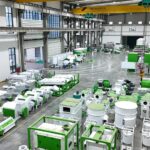

A complete livestock feed mill is a coordinated production facility rather than a single machine. To transform agricultural ingredients into finished pellets, the plant needs a sequence of processing stages that prepare, condition, compress, cool, screen, and package the material.
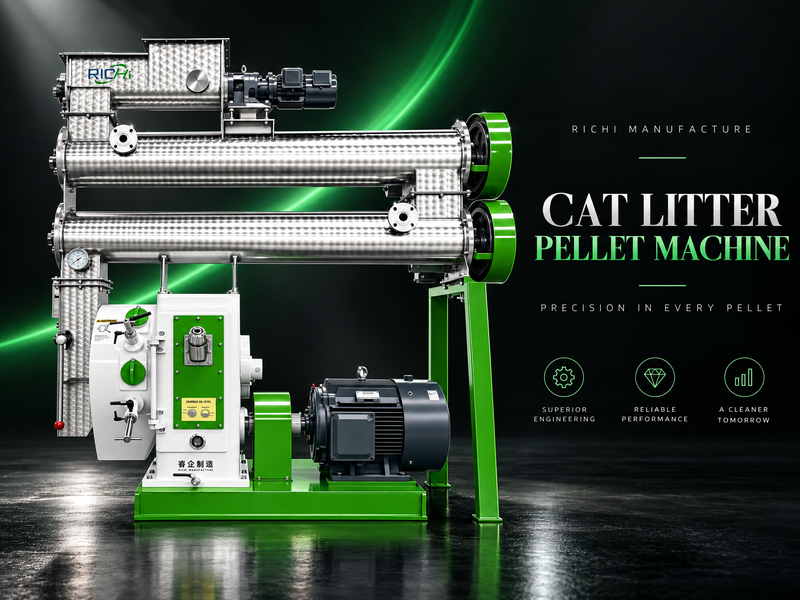
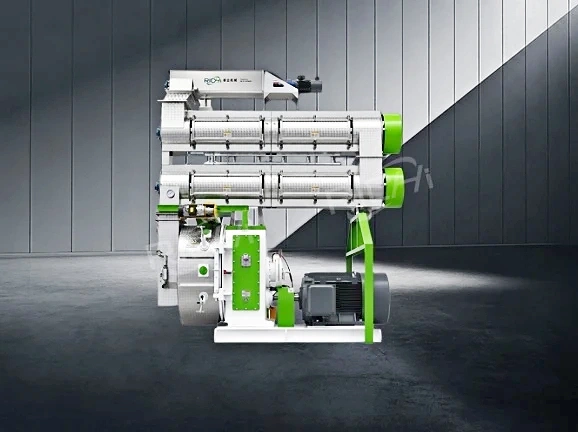
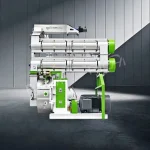
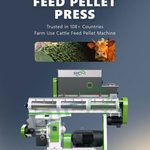
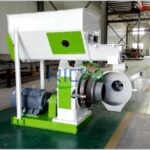
The animal feed pellet mill machine is central to this process, but its performance depends on the supporting equipment around it.
Receiving and Storing Ingredients
The production process starts before the raw materials reach the grinder.
Ingredients such as corn, wheat bran, soybean meal, forage, alfalfa, minerals, and premix should be stored in conditions that protect them from excessive moisture and contamination.
Storage capacity should correspond with production requirements and supply schedules. A plant that frequently runs short of one ingredient cannot maintain continuous production regardless of pellet mill capacity.
Grinding the Raw Materials
Grinding prepares coarse ingredients for mixing and pelleting. The required particle size depends on the feed formula and final pellet specifications.
The grinder should have sufficient capacity to support the downstream process. In larger plants, multiple grinding arrangements may be used to improve flexibility.
Proper particle size can also influence pellet quality because excessively large particles may interfere with uniform compression.
Batching and Mixing
Once materials are prepared, they are weighed according to the formula and mixed.
Accurate batching is important for nutritional consistency. The mixer must distribute major ingredients and smaller components evenly.
Commercial livestock feed mills may manufacture multiple formulas, so production scheduling and equipment cleaning become important operational considerations.
Conditioning and Pelletizing
After mixing, the mash moves to the conditioning section.
Steam can be introduced to heat and moisten the material before it enters the pellet mill. The conditioner needs to provide sufficient mixing and contact time for the formula being processed.
The prepared mash is then compressed through the ring die. Roller pressure and die specifications influence pellet formation and final dimensions.
Cooling and Screening
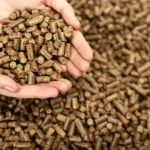
Fresh pellets are hot and require cooling before storage.
The cooling system should be selected according to pellet mill capacity. Adequate cooling helps prepare the product for screening and packing.
The screen separates fines from finished pellets. Fines can often be returned to the production process, depending on the plant design and product requirements.
If the finished feed needs a smaller particle size, additional processing equipment may be included.
Designing the Complete Plant
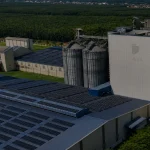
A complete livestock feed mill plant should provide a logical flow from raw material receiving to finished product storage.
Conveyors, elevators, bins, control systems, dust collection, electrical equipment, and packing machines all form part of the overall facility.
Plant layout should also provide maintenance access. Major machines need sufficient working space for inspection and replacement of wear components.
Quality Control During Production
Feed quality should be monitored throughout the process rather than only after production.
Raw material condition, particle size, mixing uniformity, conditioning, pellet appearance, temperature, and final moisture can all provide useful information.
When pellet quality changes, operators should investigate the process rather than assuming the pellet mill is solely responsible.
Producers can check this site out to review related equipment information before planning a complete livestock feed project.
Selecting a Project Partner
Richi Pellet Machine equipment can be used as part of animal feed and livestock feed processing systems. The final plant configuration can be adapted according to production capacity, raw materials, feed formulas, pellet sizes, and factory conditions.
For a complete project, technical support can be important during equipment selection, layout design, installation, commissioning, and later maintenance.
Building for Long-Term Operation
A livestock feed mill should be designed with both current and future production in mind.
If the producer expects to add new products, increase output, or introduce additional automation, the initial layout should leave suitable space and utility capacity.
A complete feed mill works best when each stage is properly matched. Grinding should support mixing, mixing should support conditioning, conditioning should support pelletizing, and cooling and screening should support final handling.
This integrated approach allows producers to use agricultural ingredients more efficiently while maintaining a stable process for commercial livestock feed production.
view details: https://www.richimanufacture.com/animal-feed-pellet-machine-for-sale/