

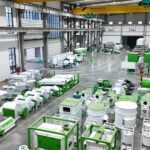
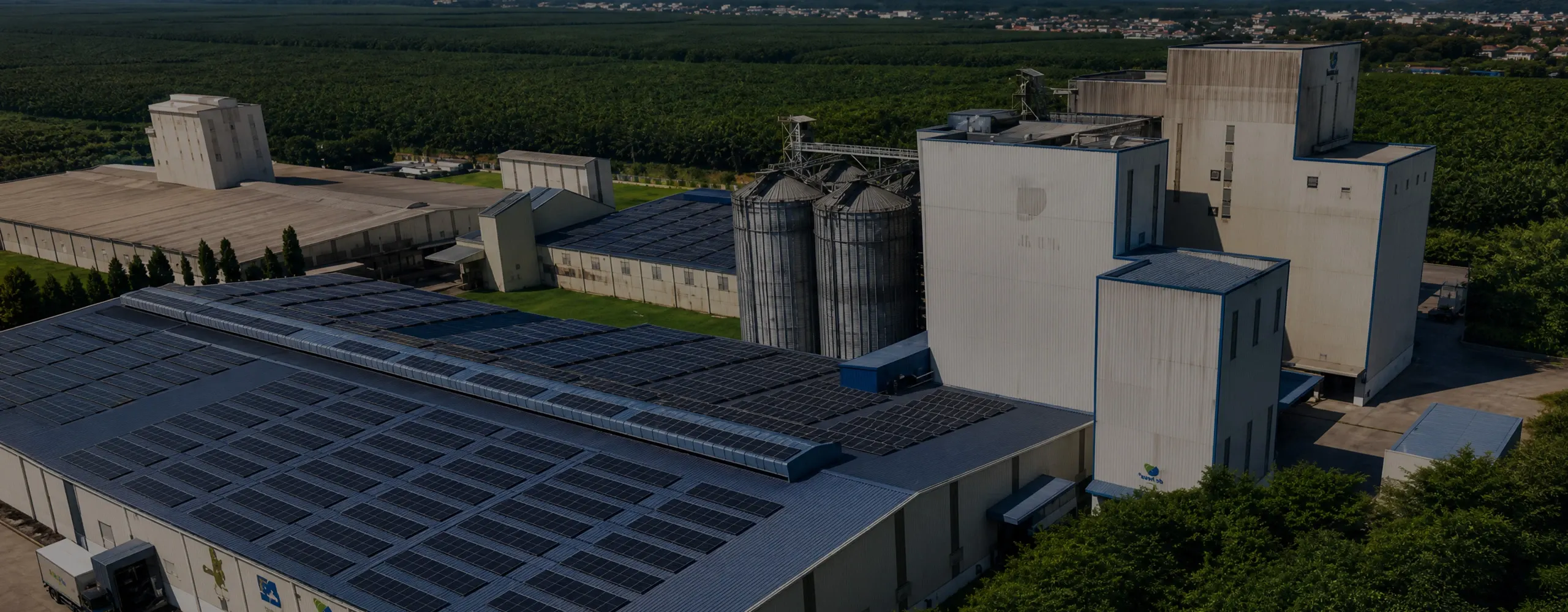
Producing quality pig feed involves much more than grinding grain and adding a few nutritional ingredients. A modern feed plant needs to manage raw materials, formulation accuracy, particle size, mixing uniformity, pellet quality, storage, and production efficiency as one connected process.
For farmers and feed manufacturers planning a new facility, understanding the complete production process can make equipment selection much easier. The right configuration depends on the type of pigs being fed, the desired production capacity, the available raw materials, and whether the final product will be mash feed, pellets, or both.
A well-designed pig feed mill can integrate these processes into a continuous workflow, but the actual configuration should always be based on the specific production requirements rather than a standard equipment list.
This guide looks at some of the most common questions related to pig feed manufacturing, from ingredient selection and formulation to equipment configuration and plant planning.
What Raw Materials Are Commonly Used for Pig Feed?
Pig feed formulas vary according to animal age, production stage, nutritional targets, and local ingredient availability.
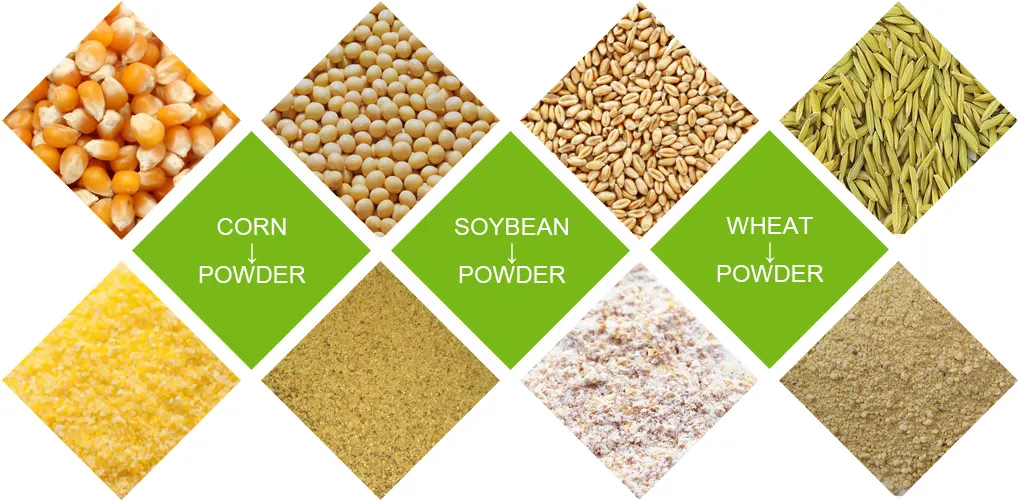
Common energy sources include corn, wheat, barley, sorghum, and other cereal grains. Protein sources can include soybean meal, rapeseed meal, sunflower meal, fish meal, or other protein-rich ingredients where appropriate.
Feed formulas may also contain:
- Vitamins and minerals
- Amino acids
- Phosphate sources
- Limestone
- Salt
- Enzymes
- Feed additives
- Oil or other liquid ingredients
There is no universal formula suitable for every pig. Piglets, growers, finishers, sows, and boars have different nutritional requirements.
For example, piglet feed often requires highly digestible ingredients and careful control of particle size, while finishing pig diets may focus more on balancing energy and protein for efficient growth.
Therefore, the first step in designing a feed manufacturing process is understanding the intended feed products.
How Should Pig Feed Ingredients Be Proportioned?
Ingredient proportions should be determined according to the nutritional requirements of the target animals.
A formulation normally considers energy, crude protein, amino acids, fiber, minerals, vitamins, and other nutritional parameters. Ingredient prices and availability may also influence the final formula.
However, cost should not be the only consideration. An inexpensive raw material may have limitations in digestibility, fiber content, moisture, or nutrient availability.
Feed formulation software can help nutritionists compare different combinations of ingredients while maintaining nutritional specifications.
Once the formula has been established, the production equipment must be able to measure each ingredient accurately. This becomes especially important for micro-ingredients that are included at very low levels.
Does Particle Size Affect Pig Feed Quality?
Yes. Particle size can affect feed utilization, processing efficiency, and pellet quality.
Grinding reduces the particle size of cereal grains and other suitable materials, increasing the surface area available during digestion and making the material easier to process.
Hammer mills are widely used for feed grinding because they can process various cereal grains and other materials.
However, excessively fine grinding is not automatically beneficial. It can increase energy consumption and may create excessive dust. Particle size should therefore be selected according to the animal category, feed form, raw material characteristics, and production objectives.
A practical feed plant aims for a consistent particle size rather than simply trying to achieve the smallest possible particles.
What Happens Before the Ingredients Are Mixed?
Before mixing, raw materials normally pass through several preparation stages.
Bulk ingredients may be received through a hopper and transferred into storage bins or silos. They can then be cleaned to remove stones, metal, fibers, and other unwanted materials.
Magnets can help remove ferrous metal particles, while screening equipment can separate larger foreign materials.
After cleaning, ingredients that require size reduction can be sent to the grinding section.
The processed materials are then weighed according to the feed formula.
Accurate weighing is essential because even a well-designed formula can produce inconsistent feed if the actual ingredient quantities differ significantly from the intended recipe.
Why Is Accurate Dosing So Important?
Dosing determines how much of each ingredient enters a batch.
Large-volume ingredients such as corn or wheat can generally be handled using larger weighing systems. Smaller ingredients may require separate dosing equipment to achieve the necessary accuracy.
Micro-ingredients such as vitamins, minerals, and amino acids are especially sensitive to dosing errors because they are often included in relatively small quantities.
For commercial feed production, automated batching systems can improve consistency and reduce manual weighing work.
However, automation should be selected according to production scale. A small farm feed operation may not need the same level of automation as a high-capacity commercial plant.
How Does the Mixing Process Work?
After weighing, the ingredients are transferred into a mixer.
The main objective of mixing is to distribute all components as uniformly as possible throughout the batch.
Common industrial mixer designs include ribbon mixers, paddle mixers, and other horizontal mixing systems. The appropriate model depends on batch capacity, ingredient characteristics, mixing time, and required uniformity.
Mixing time should be carefully controlled. Insufficient mixing can result in uneven nutrient distribution, while excessive mixing may increase energy consumption without providing meaningful additional benefits.
The sequence in which ingredients are introduced can also affect mixing performance.
For example, micro-ingredients may first be diluted with a suitable carrier material before being introduced into the main batch. This approach can improve the distribution of low-inclusion components.
Should Pig Feed Be Produced as Mash or Pellets?
Both forms are used in pig production.
Mash feed is relatively simple to manufacture because it does not require a pelleting stage. It can be suitable for certain farms and feed applications.
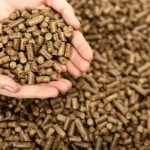
Pelleted feed, on the other hand, offers several practical advantages. Pellets are easier to handle, can reduce ingredient separation, and may improve feed management in automated feeding systems.
The decision depends on the farm’s feeding system, animal requirements, local market preferences, and production economics.
Many commercial plants therefore include pelleting equipment so that they can produce both mash and pellet products when necessary.
How Does the Pelletizing Process Work?
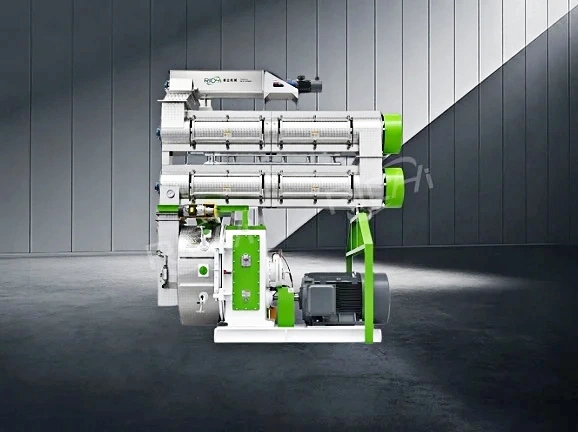
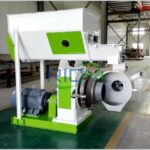
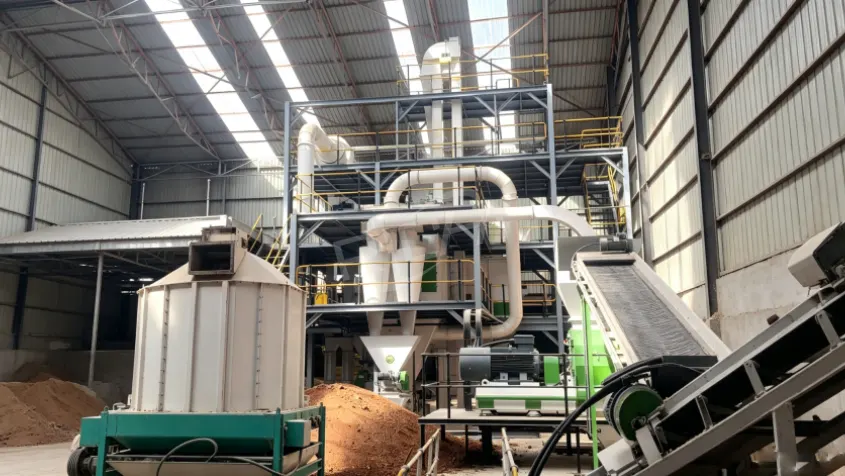
During pelleting, conditioned feed material is forced through holes in a die under pressure.
Before entering the pellet mill, the mash is commonly conditioned using steam and moisture. Conditioning helps soften the material and can improve pellet formation.
The feed is then compressed through the die to produce pellets of a specified diameter.
After leaving the pellet mill, the pellets may have a relatively high temperature and moisture level. They therefore usually pass through a cooling process before further handling.
The final pellet size can be selected according to the age and feeding requirements of the animals.
Piglet diets, for example, may require smaller pellets, while larger pigs can generally consume larger pellet sizes.
Is Steam Conditioning Necessary?
Steam conditioning is widely used in commercial pelleting systems, although the exact process depends on the feed formula and equipment configuration.
Adding controlled steam can improve moisture and temperature conditions before pelleting. This can help with pellet formation and reduce some of the mechanical load on the pellet mill.
However, not every formulation behaves in exactly the same way.
High-fiber materials, high-fat formulas, and formulas with different starch characteristics may respond differently during conditioning.
Therefore, steam pressure, temperature, moisture, and retention time should be optimized according to the actual formulation rather than copied from another feed plant.
What Happens After Pelleting?
Fresh pellets generally require cooling before storage.
A counterflow cooler is commonly used in commercial feed plants. Cooling reduces the temperature of the pellets and helps remove excess moisture.
After cooling, the pellets may pass through a crumbler if smaller particles are required.
For example, piglet feed may be processed into smaller particles to make it easier for young animals to consume.
Screening can then separate acceptable pellets from fines and oversized particles.
Fines can often be returned to the production process, depending on the plant’s process design.
How Important Is Feed Storage?
Proper storage is essential for preserving feed quality after production.
Finished feed should be protected from moisture, pests, excessive heat, and contamination.
Storage systems may include bins, silos, or bagged-product warehouses.
The storage method depends on the product type and distribution model. Large commercial facilities may use bulk storage and automated loading, while smaller plants may rely more heavily on bagged products.
Raw materials also need appropriate storage conditions. Ingredients with high moisture content can be more susceptible to spoilage, while some additives may require protection from heat, humidity, or direct sunlight.
Good inventory management is therefore an important part of feed manufacturing.
What Machines Are Needed for Premix Production?
Although premix production is a separate process from complete pig feed manufacturing, there can be similarities in weighing, dosing, mixing, and material handling.
People researching what machines are included in premix feed production line will commonly encounter equipment such as micro-ingredient dosing systems, weighing units, mixers, conveyors, storage bins, dust collectors, and packing machines.
The exact equipment configuration depends on the premix formula and required capacity.
A premix system designed for a few hundred kilograms per batch may have a very different layout from an industrial facility producing several tons per hour.
Understanding this distinction is useful when planning a feed factory because premixes can either be purchased from external suppliers or manufactured internally.
Can Liquid Ingredients Be Added to Pig Feed?
Yes. Some pig feed formulas may include liquid ingredients such as oils, molasses, or other suitable liquid additives.
Liquid addition systems generally include storage tanks, pumps, pipelines, meters, and spraying devices.
The liquid should be distributed evenly throughout the feed material. Uneven application can cause differences in energy content and may negatively affect pellet quality.
Liquid addition can be carried out during mixing or conditioning depending on the formulation and process design.
The amount of liquid that can be added is influenced by the physical properties of the feed and the capacity of the downstream equipment.
What Production Capacity Is Suitable for a New Feed Mill?
Capacity should be calculated according to actual market demand rather than simply choosing the largest available machine.
Small farms may only need a compact system capable of producing a few hundred kilograms or around one ton per hour.
Medium commercial operations may consider capacities in the range of several tons per hour, while large feed manufacturers can require much higher output.
The number of working hours and shifts should also be considered.
For example, a plant producing 3 tons per hour for eight hours a day has a theoretical daily production capacity of approximately 24 tons before accounting for downtime, maintenance, formulation changes, and other interruptions.
Realistic capacity calculations should therefore include an appropriate operating margin.
How Long Does It Take to Build a Feed Plant?
Construction time depends on the size and complexity of the project.
A relatively small production system may have a shorter installation period because it requires fewer machines and less infrastructure.
A larger automated plant may require more time for:
- Site preparation
- Building construction
- Equipment manufacturing
- Equipment transportation
- Mechanical installation
- Electrical installation
- Control-system commissioning
- Trial production
The equipment itself may be manufactured before the building is completed, allowing some stages of the project to overlap.
A detailed project schedule should therefore be prepared after the equipment configuration and building conditions have been confirmed.
What Factors Influence the Cost of a Feed Mill?
The total investment can vary widely between projects.
Major cost factors include:
- Production capacity
- Number of raw materials
- Storage requirements
- Grinding capacity
- Batching accuracy
- Mixer capacity
- Pellet mill capacity
- Automation level
- Packaging system
- Building and civil construction
- Electrical installation
- Dust collection
- Transportation and installation
It is therefore difficult to estimate the cost of a complete feed plant based on the pellet mill alone.
A complete project quotation should ideally distinguish between equipment cost, auxiliary systems, installation, transportation, and other project-related expenses.
This makes it easier for investors to compare different technical proposals on a like-for-like basis.
Related Post: https://commercialpelletmill.com/cattle-feed-plant-cost/
How Can Energy Consumption Be Controlled?
Energy efficiency should be considered during the design stage.
Grinding and pelleting are generally among the more energy-intensive processes in a feed plant.
Choosing appropriately sized motors, reducing unnecessary material handling, maintaining equipment properly, and controlling operating parameters can help improve efficiency.
Overloading machines is not necessarily an efficient strategy. Equipment should operate within its intended range so that production remains stable.
Regular maintenance also matters. Worn hammers, damaged screens, poorly aligned components, or inefficient bearings can increase energy consumption and reduce throughput.
How Can Feed Quality Be Kept Consistent?
Consistency requires control at multiple stages.
Incoming raw materials should be inspected before use. The formulation should be managed carefully, and weighing systems should be calibrated regularly.
Mixing performance should be checked to ensure that nutrients and additives are distributed evenly.
For pelleted feed, operators should monitor pellet durability, moisture, temperature, fines, and physical appearance.
Production records can help identify changes in product quality and trace them back to specific batches or raw-material lots.
Laboratory testing can provide additional information about nutritional composition and other quality parameters.
Quality management is therefore not a single inspection at the end of production. It is a continuous process.
Is Automation Worth Considering?
Automation can provide several advantages, particularly for medium- and large-scale facilities.
Automated systems can manage ingredient dosing, batching, mixing sequences, material transfer, and production records.
They can also reduce the number of manual operations required during normal production.
However, the appropriate degree of automation depends on the project’s size and operating model.
For a small farm feed mill, excessive automation may add complexity without providing enough practical benefit. For a high-volume commercial plant, automated controls can become much more valuable because many batches and formulations may need to be managed every day.
The best approach is to match automation with production requirements.
What Should Be Considered Before Buying Equipment?
Before purchasing machinery, investors should prepare a clear list of production requirements.
Important questions include:
- What types of pig feed will be produced?
- What raw materials are locally available?
- What is the target production capacity?
- Will the plant produce mash, pellets, or both?
- What pellet sizes are required?
- Are liquid ingredients needed?
- How many formulas will be produced?
- What packaging sizes are required?
- What level of automation is appropriate?
- Is future expansion expected?
These questions help suppliers develop a more realistic process design.
It is also useful to consider after-sales support, spare-parts availability, installation services, operator training, and technical documentation.
What Role Does the Equipment Manufacturer Play?
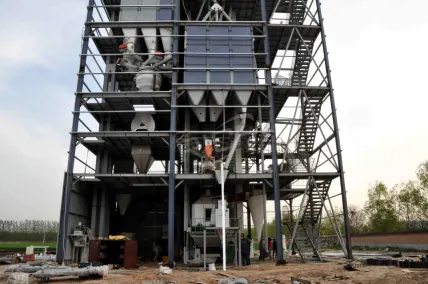
A feed mill is a combination of many interconnected systems, so equipment compatibility matters.
A manufacturer or engineering company may assist with process design, equipment selection, layout planning, installation, commissioning, and technical support.
When comparing suppliers, it is useful to look beyond individual machine specifications and examine whether the proposed system forms a coherent production process.
For companies researching feed machinery and complete processing solutions, feed pellet machine is one manufacturer that can be included in the supplier comparison process.
The most useful comparison should focus on technical suitability, production requirements, equipment configuration, service support, and long-term operating considerations rather than simply comparing the initial equipment quotation.
Final Thoughts: What Makes a Feed Plant Practical?
A practical pig feed plant is not necessarily the one with the largest capacity or the highest level of automation.
Instead, the system should match the actual production requirements of the business.
The process begins with suitable raw materials and a properly formulated feed recipe. Cleaning, grinding, accurate dosing, mixing, conditioning, pelleting, cooling, screening, storage, and packaging then need to work together efficiently.
Production capacity should be calculated realistically, while equipment should be selected according to the characteristics of the ingredients and the desired final product.
For new investors, understanding these fundamentals before purchasing equipment can make the entire project easier to plan. It can also help avoid common problems such as insufficient storage, inaccurate dosing, unnecessary equipment, or bottlenecks between processing stages.
Whether the goal is a small farm-scale operation or a larger commercial facility, the most important principle remains the same: design the production process first, and then select machinery that supports that process.