


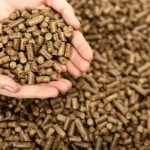

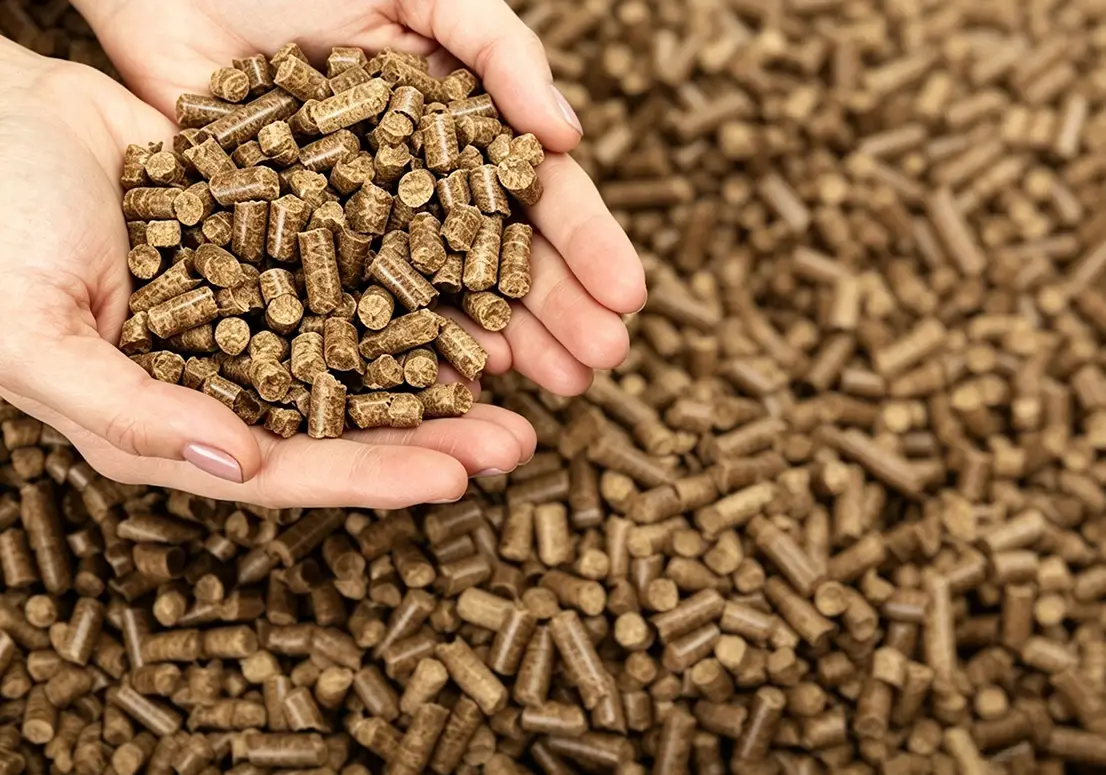
Empty fruit bunches (EFB) are one of the major solid residues generated by palm oil mills. With large quantities produced during palm oil processing, EFB can become a valuable biomass resource when properly processed into fuel pellets. However, EFB pelletizing is not always straightforward. Its fibrous structure, relatively high moisture content, variable particle size, and inconsistent raw material characteristics can all affect production efficiency.
Improving EFB pelletizing efficiency requires more than simply increasing the speed of the pellet mill. The entire production process must be coordinated, from EFB collection and preparation to drying, crushing, pelletizing, cooling, screening, and packaging. A properly designed production line can improve throughput, reduce energy consumption, stabilize pellet quality, and minimize equipment downtime.
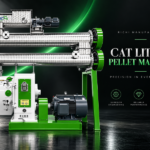
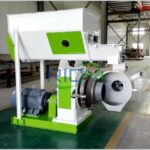
An appropriately configured EFB pellet maker is also important because different EFB materials require different feeding, compression, and die configurations. This article explains the major factors that affect EFB pelletizing efficiency and provides practical approaches for improving the performance of an EFB pellet production line.
What Is EFB Pelletizing Efficiency?
EFB pelletizing efficiency refers to how effectively a production line converts empty fruit bunches into high-quality biomass pellets while maintaining stable output and reasonable energy consumption.
Several indicators can be used to evaluate efficiency, including:
- Pellet production capacity
- Energy consumption per ton of pellets
- Pellet durability
- Pellet density
- Pellet size consistency
- Material loss
- Pellet mill operating stability
- Equipment downtime
- Raw material utilization
- Overall production cost
High production capacity alone does not necessarily mean high efficiency. For example, a pellet mill may achieve a high short-term output but consume excessive electricity or produce a large percentage of fines. In this case, the actual production efficiency may still be poor.
A well-designed EFB pelletizing process should balance production capacity, pellet quality, energy consumption, and equipment reliability.
Why Is EFB Difficult to Pelletize?
EFB has several characteristics that can make pellet production more challenging than processing some conventional wood residues.
High Moisture Content
Fresh EFB can contain considerable moisture after it leaves the palm oil mill. Excessive moisture can reduce pelletizing efficiency because the material may not compress properly and can cause unstable operation.
Wet EFB may also increase the workload of the dryer. If the drying process is not properly controlled, the pellet mill may receive material with inconsistent moisture levels.
Fibrous Structure
EFB contains long fibers that can interfere with crushing, feeding, and compression. Long fibers may wrap around equipment components or create irregular feeding conditions.
For this reason, EFB normally requires appropriate shredding and crushing before entering the pellet mill.
Variable Particle Size
Raw EFB can contain large bunches, fibers, shells, and other palm processing residues. Feeding these materials directly into the pellet mill can result in unstable production.
Particle size must therefore be controlled before pelletizing.
Variable Raw Material Characteristics
EFB properties can vary according to palm variety, processing conditions, storage conditions, and moisture content. A pellet production line must therefore be able to handle fluctuations in raw material characteristics.
Improve EFB Pelletizing Efficiency Through Proper Raw Material Preparation
Raw material preparation is one of the most important stages of the entire pelletizing process.
A typical EFB pellet production process may include:
EFB collection → cleaning → shredding → drying → crushing → fine grinding → pelletizing → cooling → screening → packaging
Each stage affects the performance of the following stage.
If raw material preparation is inadequate, even a high-quality pellet mill may not achieve its expected capacity.
Remove Foreign Materials
Before EFB enters the processing system, unwanted materials should be removed as much as possible.
Foreign materials may include:
- Stones
- Metal pieces
- Sand
- Soil
- Plastic
- Other processing residues
A cleaning system can reduce the risk of damage to crushers, grinders, and pellet mills.
Magnetic separators can also be installed where necessary to remove ferrous metal particles.
Reduce Long Fibers
Long EFB fibers can make feeding and grinding difficult. A shredding or crushing stage can reduce the material into a more manageable form.
The objective is not necessarily to produce very fine particles at the first stage. Instead, the initial crushing process should make the material easier to dry and prepare for subsequent grinding.
Control EFB Moisture Content Carefully
Moisture is one of the most important variables in EFB pelletizing.
If the material is too wet, it may have difficulty forming stable pellets. Excessive moisture can also increase energy consumption during pelletizing and reduce the effective capacity of the pellet mill.
If the material is too dry, natural binding may become less effective and pellet formation can become unstable.
Therefore, the drying system should aim for a relatively consistent moisture level rather than simply reducing moisture as much as possible.
Use a Proper Rotary Dryer
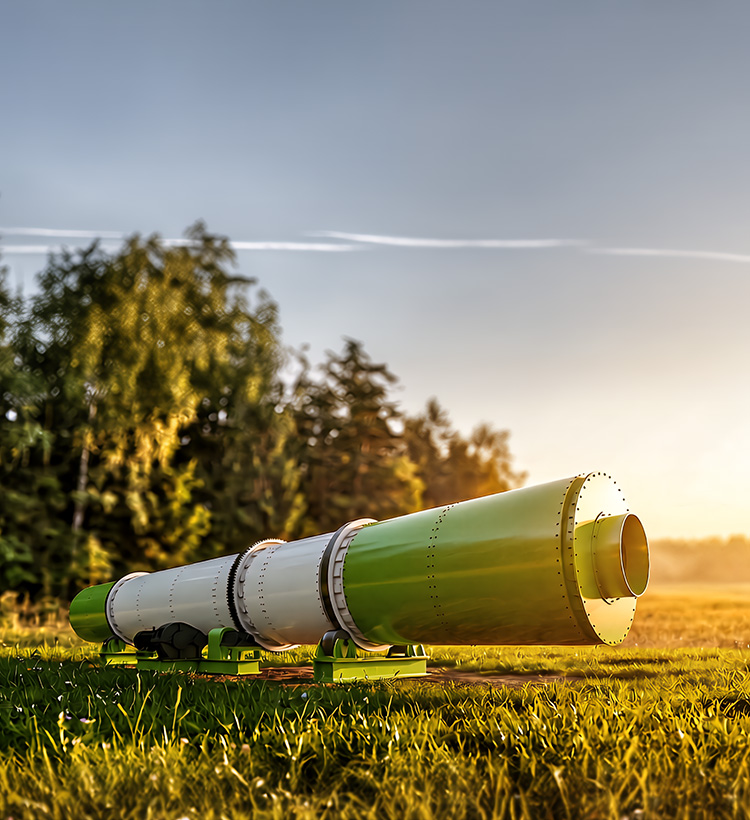
An industrial rotary dryer machine is commonly used in biomass pellet production because it can process large quantities of material continuously.
For EFB, dryer design should consider:
- Initial moisture content
- Required final moisture content
- Material throughput
- Heat source
- Residence time
- Airflow
- Drum dimensions
- Heat recovery possibilities
The dryer should provide uniform moisture reduction without excessive overheating.
Avoid Uneven Drying
Uneven moisture is another common cause of unstable pelletizing.
For example, if one portion of the material is very wet while another portion is already dry, the pellet mill may receive inconsistent feedstock. This can lead to fluctuations in current load, pellet density, and output.
Continuous moisture monitoring can help operators identify problems before they significantly affect production.
Optimize EFB Particle Size
Particle size directly influences pellet formation.
If EFB particles are too large, the material may not enter the die holes smoothly. Large fibers can also reduce compression efficiency.
If particles are excessively fine, grinding may consume unnecessary energy.
The ideal particle size depends on the raw material, pellet diameter, die specifications, and equipment configuration.
A practical approach is to use a two-stage size reduction process:
- Initial shredding or crushing
- Fine grinding before pelletizing
This allows the production line to handle bulky EFB efficiently while achieving the particle size required by the pellet mill.
Choose the Right EFB Pellet Maker
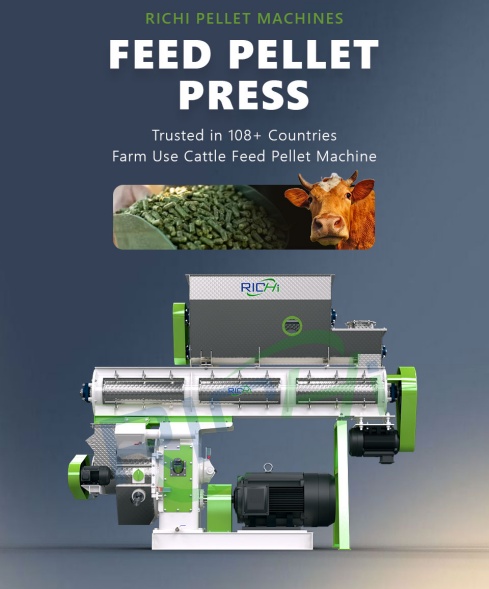
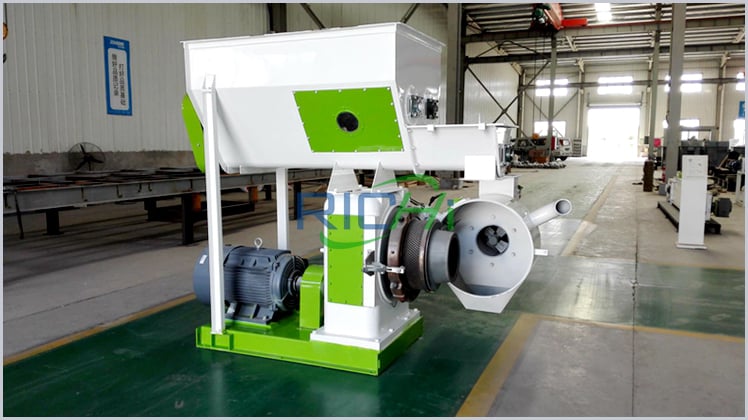
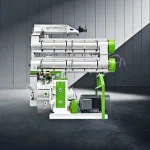
The pellet mill is the core machine in the EFB pellet production line. Choosing an EFB pellet maker based only on its advertised capacity can lead to problems.
The machine should be selected according to:
- Required production capacity
- EFB characteristics
- Pellet diameter
- Raw material moisture
- Particle size
- Compression ratio
- Motor power
- Die material
- Roller configuration
- Operating hours
- Automation requirements
A suitable machine should maintain stable compression and feeding under the actual working conditions of the EFB material.
(learn more:https://richipelletizer.com/efb-pellet-machine/)
Ring Die Pellet Mill
For medium- and large-scale EFB pellet plants, a ring die pellet mill can be used when continuous and high-capacity production is required.
The ring die structure allows material to be compressed through multiple die holes simultaneously. This makes it suitable for industrial biomass pellet production.
Flat Die Pellet Mill
Flat die pellet mills may be suitable for smaller production requirements and certain decentralized biomass pellet projects.
The final choice depends on the desired capacity, investment level, raw material characteristics, and operating conditions.
Optimize the Compression Ratio
Die compression ratio is an important factor affecting pellet quality and production efficiency.
The compression ratio determines how much resistance the biomass material encounters as it passes through the die holes.
If the compression ratio is too low, pellets may be loose and have poor durability.
If the compression ratio is too high, the pellet mill may require more power and experience excessive die and roller wear.
Therefore, the die should be selected according to EFB characteristics and the required pellet diameter.
A professional pellet plant supplier can evaluate raw material characteristics and recommend an appropriate die configuration.
Improve Feeding Stability
Even a well-designed pellet mill cannot perform efficiently if the feeding system is unstable.
EFB is fibrous and relatively lightweight compared with many conventional feedstocks. This means it can sometimes bridge or accumulate in the hopper.
A stable feeding system should provide:
- Continuous material flow
- Controlled feeding speed
- Anti-bridging measures
- Appropriate hopper design
- Variable-speed control when necessary
A variable-frequency drive can help operators adjust feeding speed according to pellet mill load.
When the material feed is stable, the pellet mill can operate closer to its designed working range.
Prevent Material Bridging
Material bridging occurs when biomass forms a blockage inside the hopper or feeding channel.
This can cause sudden reductions in material flow and result in unstable pellet production.
EFB fibers are particularly important to consider because long fibers can interlock with each other.
Possible solutions include:
- Proper hopper geometry
- Agitators
- Screw feeders
- Variable-speed feeders
- Anti-bridging devices
- Properly sized feeding openings
The feeding system should be designed together with the pellet mill rather than treated as an independent component.
Improve Pellet Mill Operating Parameters
Once the equipment has been selected, operating parameters should be adjusted according to the actual EFB feedstock.
Important parameters include:
- Feeding rate
- Motor load
- Die compression ratio
- Roller clearance
- Material moisture
- Pellet diameter
- Conditioning conditions when applicable
The operator should avoid continuously running the pellet mill at maximum load if this causes excessive current fluctuations or mechanical stress.
Stable operation is generally more valuable than short-term maximum output.
Maintain Proper Roller and Die Clearance
The roller and die are two critical components of a pellet mill.
If the gap is inappropriate, pelletizing efficiency can decrease.
Excessive clearance may reduce compression effectiveness, while insufficient clearance may increase friction, wear, and energy consumption.
Regular inspection is therefore necessary.
The operator should monitor:
- Die surface condition
- Roller shell wear
- Die hole condition
- Roller clearance
- Abnormal vibration
- Motor current
- Pellet quality
Replacing severely worn components can restore production efficiency and reduce unnecessary energy consumption.
Reduce Pellet Mill Downtime
Downtime has a direct effect on annual production.
Even a pellet mill with high theoretical capacity can produce relatively little over a year if it experiences frequent shutdowns.
Common causes of downtime include:
- Die blockage
- Roller wear
- Bearing problems
- Feeding problems
- Overloading
- Foreign materials
- Poor lubrication
- Electrical faults
Preventive maintenance can significantly reduce unexpected shutdowns.
Establish a Maintenance Schedule
Maintenance should include regular inspection of:
- Bearings
- Gearbox
- Drive motor
- Die
- Rollers
- Lubrication system
- Feeding system
- Conveyors
- Crushers
- Dryers
Maintenance intervals should be determined according to actual operating hours and manufacturer recommendations.
Improve the Drying System to Reduce Energy Consumption
Drying can represent a significant portion of the energy consumption in an EFB pellet plant.
Improving dryer efficiency can therefore reduce the overall cost of pellet production.
Several approaches can help:
Use Appropriate Heat Sources
The heat source should match the plant’s location, available fuels, operating cost, and environmental requirements.
In some biomass plants, a portion of biomass residues can be used as fuel for the thermal system.
Improve Heat Transfer
The dryer should provide sufficient contact between hot air and wet EFB while avoiding excessive heat loss.
Proper airflow and drum design are important for achieving efficient moisture removal.
Recover Available Heat
Where technically feasible, waste heat from other processes can be recovered and reused.
Heat recovery can reduce the amount of fresh energy required by the dryer.
Use Automation to Improve Production Stability
Automation can improve both efficiency and consistency.
A modern EFB pellet plant can integrate sensors and control systems for:
- Raw material feeding
- Dryer temperature
- Material moisture
- Pellet mill load
- Conveyor operation
- Cooling temperature
- Screening
- Packaging
For example, if the pellet mill motor load increases significantly, the feeding system can automatically reduce the feed rate.
Similarly, the dryer can be adjusted according to temperature or moisture conditions.
Automation helps reduce the dependence on manual intervention and allows operators to monitor the entire production line more efficiently.
Improve Cooling and Screening Efficiency
Pellets leaving the pellet mill are normally hot and may still contain moisture.
They should be cooled before storage or packaging.
A counterflow pellet cooler can reduce pellet temperature while improving handling stability.
Effective cooling helps:
- Reduce pellet breakage
- Stabilize pellet moisture
- Improve storage performance
- Reduce condensation risk
- Improve packaging efficiency
After cooling, a vibrating screen can separate fines and undersized particles from qualified pellets.
Fines can often be returned to the production process instead of being discarded.
This improves raw material utilization.
Optimize Pellet Size
The required EFB pellet diameter depends on the intended application.
Common applications include:
- Industrial boilers
- Biomass heating systems
- Combined heat and power
- Household heating
- Other biomass fuel systems
Different applications may require different pellet dimensions.
Instead of producing one standard size for every market, manufacturers should select the pellet diameter according to customer requirements and combustion equipment.
Improve Raw Material Storage
Pelletizing efficiency can also be affected before EFB reaches the production line.
Poor storage can cause:
- Moisture absorption
- Microbial activity
- Material degradation
- Contamination
- Inconsistent feedstock characteristics
EFB should therefore be stored in a controlled environment where possible.
The storage area should provide protection against rain and excessive moisture.
Efficient material handling also reduces unnecessary transportation and labor.
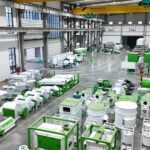
Design the Complete EFB Pellet Production Line Properly
One of the most effective ways to improve efficiency is to design the entire process as an integrated system.
For example, a typical industrial EFB pellet production line may include:
Raw EFB → Cleaning → Shredding → Drying → Crushing → Fine Grinding → Feeding → Pelletizing → Cooling → Screening → Packaging
Each machine should match the capacity of the next process.
If the dryer can process 8 tons per hour but the pellet mill can only process 4 tons per hour, the system will create bottlenecks.
Similarly, if the pellet mill can produce 6 tons per hour but the cooling or packaging system is undersized, finished-product handling will become a limitation.
Therefore, equipment capacity should be balanced across the complete production line.
Avoid Production Bottlenecks
A bottleneck occurs when one process operates significantly slower than the others.
Common bottlenecks in EFB pellet production include:
- Inadequate shredding capacity
- Insufficient drying capacity
- Slow fine grinding
- Unstable feeding
- Low pellet mill capacity
- Inefficient cooling
- Slow screening
- Manual packaging
A complete production-line analysis can identify these restrictions.
Increasing the capacity of the bottleneck process may improve overall production more effectively than upgrading another machine that is already operating below its maximum capacity.
Reduce Energy Consumption Per Ton
Energy efficiency should be measured according to energy consumption per ton of finished pellets rather than only motor power.
For example, replacing a large motor does not necessarily reduce energy consumption if the production line remains inefficient.
A better approach is to examine the entire system:
- Dryer energy consumption
- Crusher power consumption
- Grinder power consumption
- Pellet mill electricity use
- Conveyor consumption
- Cooling system
- Packaging equipment
The production line can then be optimized based on actual energy consumption per ton.
Train Operators Properly
Operator experience can have a significant effect on production efficiency.
Operators should understand:
- How EFB characteristics affect pelletizing
- How to identify unstable feeding
- How to monitor motor load
- How to recognize abnormal vibration
- How to adjust feeding rates
- How to identify die blockage
- How to perform routine maintenance
- How to evaluate pellet quality
Proper training helps prevent operating errors and allows problems to be identified at an early stage.
Monitor Pellet Quality During Production
Efficiency should not be separated from pellet quality.
A production line that produces large quantities of fragile pellets is not truly efficient.
Important quality indicators include:
- Pellet durability
- Pellet density
- Moisture content
- Pellet diameter
- Fine percentage
- Surface appearance
- Mechanical strength
Regular quality checks can help operators identify process problems.
For example, increasing fines may indicate inappropriate moisture, die wear, insufficient compression, or unstable feeding.
Common Problems That Reduce EFB Pelletizing Efficiency
Several common problems can reduce the performance of an EFB pellet plant.
Problem 1: EFB Is Too Wet
Excessive moisture can reduce pellet strength and increase energy consumption.
Solution: Improve dryer performance and monitor moisture before pelletizing.
Problem 2: Material Contains Too Many Long Fibers
Long fibers can cause unstable feeding and poor compression.
Solution: Improve shredding and grinding before pelletizing.
Problem 3: Pellet Mill Frequently Overloads
Overloading may be caused by excessive feeding, unsuitable moisture, improper die compression, or foreign materials.
Solution: Adjust the feed rate and investigate the root cause rather than simply reducing production speed.
Problem 4: High Percentage of Fines
High fines may result from insufficient compression, improper moisture, worn die or rollers, or inadequate cooling.
Solution: Check the complete pelletizing process rather than focusing only on the pellet mill.
Problem 5: Frequent Equipment Shutdowns
Frequent shutdowns increase labor costs and reduce annual production.
Solution: Establish preventive maintenance and keep critical spare parts available.
How a Complete EFB Pelletizing Solution Improves Efficiency
For palm oil mills and biomass fuel producers, purchasing individual machines may not always provide the best production result.
An integrated solution considers the relationship between all processing stages.
A complete EFB pelletizing solution can be customized according to:
- EFB availability
- Initial moisture
- Required capacity
- Pellet diameter
- Final application
- Factory layout
- Available energy sources
- Automation requirements
- Local operating conditions
This approach makes it possible to coordinate the dryer, grinder, pellet mill, cooler, screening machine, conveyors, and packaging system.
For large-scale projects, a turnkey solution can also include production-line design, equipment manufacturing, transportation, installation, commissioning, operator training, and after-sales support.
(visit this site right here: RICHI Pelletizer )
How to Select an EFB Pelletizing System
Before investing in an EFB pellet production line, several questions should be considered.
What Is the Available EFB Supply?
The production capacity should correspond to the actual amount of EFB available.
What Is the Initial Moisture Content?
Moisture determines the required drying capacity and influences overall energy consumption.
What Pellet Capacity Is Required?
The target may range from a small biomass fuel operation to a large industrial pellet plant.
What Pellet Diameter Is Needed?
The required diameter should be determined by the final application.
What Is the Desired Automation Level?
A small plant may use more manual control, while a large industrial plant may benefit from centralized automatic control.
How Will the Finished Pellets Be Used?
Industrial boilers, biomass heating systems, and other users may have different pellet requirements.
Answering these questions before equipment selection can prevent capacity mismatches and unnecessary investment.
Practical Strategies for Higher EFB Pelletizing Efficiency
The following strategies can provide a practical starting point for improving an EFB pellet production line:
- Maintain consistent raw material moisture.
- Remove stones, metal, and other contaminants.
- Reduce long EFB fibers before fine grinding.
- Optimize particle size according to pellet specifications.
- Select the appropriate die compression ratio.
- Use a stable and controllable feeding system.
- Maintain proper roller and die clearance.
- Monitor pellet mill motor load.
- Establish preventive maintenance procedures.
- Improve dryer heat efficiency.
- Use effective pellet cooling and screening.
- Recycle suitable fines back into production.
- Balance the capacity of all machines.
- Introduce automation where it provides practical benefits.
- Train operators in process control and maintenance.
Conclusion
Improving EFB pelletizing efficiency requires a complete-process approach. The performance of the pellet mill is important, but it is only one part of the production system. Moisture control, particle size, raw material preparation, feeding stability, die selection, equipment maintenance, cooling, screening, and automation can all influence final production efficiency.
A properly selected EFB pellet maker should be matched with the actual characteristics of the EFB feedstock and the required production capacity. At the same time, the dryer, crusher, grinder, cooler, screen, conveyors, and packaging system should be designed to work together without creating bottlenecks.
For palm oil mills and biomass fuel producers, efficient EFB pelletizing can turn a large-volume agricultural residue into a standardized biomass fuel product. By controlling the entire process from raw EFB preparation to finished pellet packaging, producers can improve throughput, reduce unnecessary energy consumption, stabilize pellet quality, and achieve more reliable long-term operation.
The most effective EFB pelletizing system is therefore not simply the machine with the highest rated capacity. It is a balanced production line designed around the raw material, pellet specifications, production target, energy conditions, and final application.