



Understanding the Role of Starch in the Formulation
Cassava starch can be considered as a formulation ingredient when developing certain plant-based cat litter products. Its suitability depends on the complete recipe, processing conditions, and performance targets rather than on the ingredient alone. Manufacturers need to establish how starch interacts with fibers, water, and other ingredients before finalizing their production method.
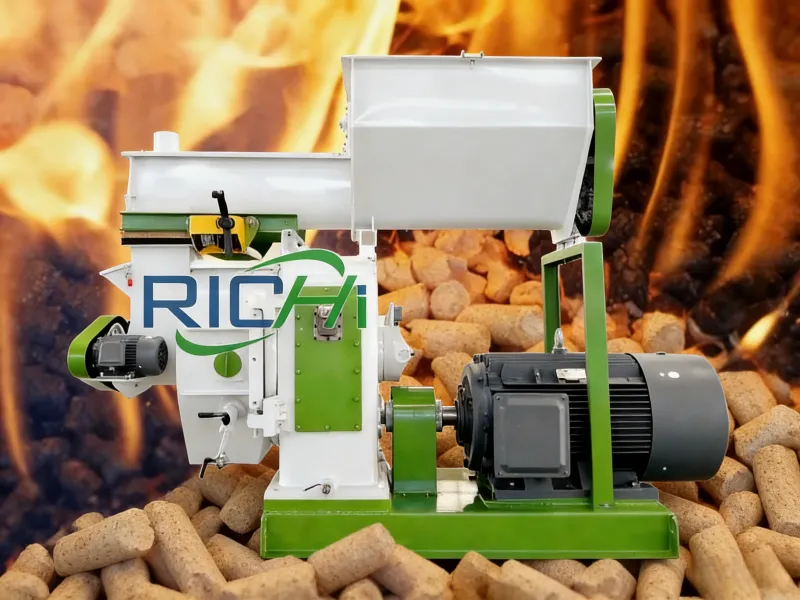
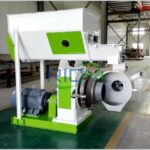
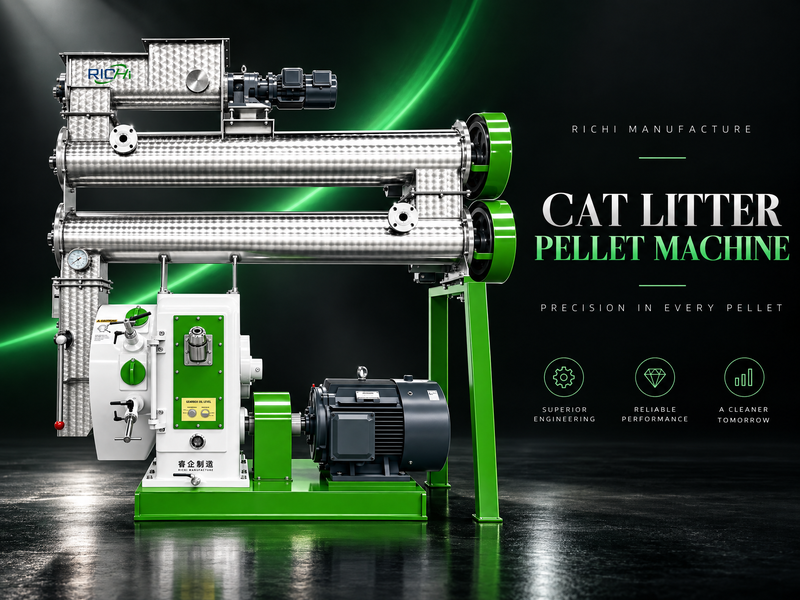
A cat litter pellet machine forms the prepared mixture into pellets, but successful forming begins with a stable recipe. Ingredients must be distributed consistently, and the mixture must have suitable characteristics for the selected forming equipment. Changes in starch quality, fiber composition, or moisture can influence the process and the properties of the finished product.
The product specification should be defined early. Important considerations may include pellet dimensions, mechanical strength, absorbency, dust generation, moisture response, and the behavior of the litter during use. These requirements guide formulation development and help determine which processing stages are necessary.
Preparing Plant Fibers for Consistent Mixing
Selecting Suitable Fiber Sources
Plant-based cat litter may incorporate soybean residue, wood fiber, agricultural residues, or other suitable plant-derived materials. Each source has its own physical characteristics. Some materials may arrive as coarse fragments, while others may be fine, moist, or prone to forming clumps during storage.
Incoming materials should be inspected for contamination, particle size, moisture, and consistency. Coarse fibers may need shredding or grinding before they can be blended effectively. Excessive size reduction, however, can consume unnecessary energy and change the handling properties of the material.
The ideal particle size should be established through testing. A uniform mixture is generally easier to process predictably than one containing large variations in particle size, but the optimal range depends on the recipe and intended product.
Managing Moisture Before Forming
Moisture influences mixing, feeding, and pellet formation. Materials that are too wet may become difficult to handle or produce inconsistent pellets. Materials that are too dry may behave differently during forming and may not achieve the intended cohesion.
The required moisture condition should be determined for the selected formulation and equipment. Operators should monitor incoming materials and adjust the process based on measured conditions rather than relying only on visual inspection.
Storage is part of moisture management. Plant fibers can absorb moisture from the surrounding environment, so covered storage and suitable handling practices help maintain more predictable production conditions.
Designing a Cassava Starch Based Process
A cassava starch cat litter production line may include raw material preparation, ingredient batching, mixing, pelleting, drying, cooling, screening, and packaging. The exact equipment sequence depends on the moisture of the incoming ingredients and whether the formulation requires additional processing.
Mixing should distribute starch and fibers consistently throughout the batch. Poor distribution may produce pellets with uneven strength, making the final product less predictable. Batch records and repeatable ingredient measurement help manufacturers identify differences between production runs.
After mixing, the forming equipment should be matched to the mixture’s characteristics. Die specifications, roller condition, feed rate, and cutter settings influence pellet geometry. A machine should be tested with a representative formulation before its final configuration is approved.
The drying stage requires particular attention when the formed product contains significant moisture. Drying capacity should match the planned throughput, and the method should suit the physical characteristics of the pellets. Cooling and screening then prepare the product for storage and packaging.
Testing Performance Rather Than Assuming It
Evaluating Mechanical Strength
Plant-based litter must withstand conveying, packaging, storage, and transportation. Pellets that break easily can create additional fines and increase material losses. Manufacturers should test the finished product after representative handling rather than evaluating freshly formed pellets alone.
The test method should reflect the intended commercial requirements. Pellet appearance is useful, but it does not fully reveal whether the product will retain its shape during distribution. Recording breakage and dust levels can help the production team compare formulations.
Checking Absorbency and Moisture Response
Absorbency and clumping behavior depend on the complete formulation and cannot be guaranteed simply by adding starch. The manufacturer should evaluate these characteristics using a consistent test procedure and compare results across multiple production batches.
Any changes to ingredient proportions should be followed by product testing. Improving pellet strength may affect other properties, so formulation decisions should consider the overall balance between processing performance and end-user expectations.
For preliminary ideas about formulation development and processing approaches, manufacturers why not try this out by reviewing technical references and discussing suitable trials with experienced equipment engineers. Ingredient claims should be validated through practical testing rather than assumed from marketing descriptions.
Coordinating Equipment and Production Capacity
The forming machine should not be treated as the only capacity constraint. If mixing, drying, or packaging operates more slowly than pelleting, the line may experience accumulation and interruptions. Equipment sizing should be coordinated using expected material flow and the actual moisture changes at each stage.
A supplier such as Richi manufacture can be asked to evaluate the proposed recipe, capacity target, and factory layout before the equipment list is finalized. The project discussion should cover raw material specifications, utility availability, pellet dimensions, automation requirements, and maintenance access.
The buyer should also clarify how off-specification material is handled. Clean material may be suitable for controlled reprocessing, but recovery procedures should protect the quality of the finished product and prevent contamination.
Considering the Commercial Opportunity
A plant-based litter project should be supported by evidence of customer demand, reliable ingredient supply, and a realistic distribution plan. The cost and availability of cassava starch may vary by region, so local sourcing conditions should be evaluated alongside product performance.
Manufacturers should calculate the cost of saleable product, including raw materials, energy, labor, packaging, maintenance, and rejected material. They should also assess whether customers value the product’s specific characteristics enough to support its intended price.
Conclusion: Validate the Recipe Before Scaling Up
Cassava starch may play a useful role in certain plant-based litter formulations, but its value depends on the complete recipe and processing method. Consistent fiber preparation, controlled mixing, appropriate forming, and finished-product testing are essential. By validating the formulation before expanding capacity, manufacturers can reduce process uncertainty and build a more reliable production strategy.
View details: https://www.richimanufacture.com/cat-litter-pellet-machine/