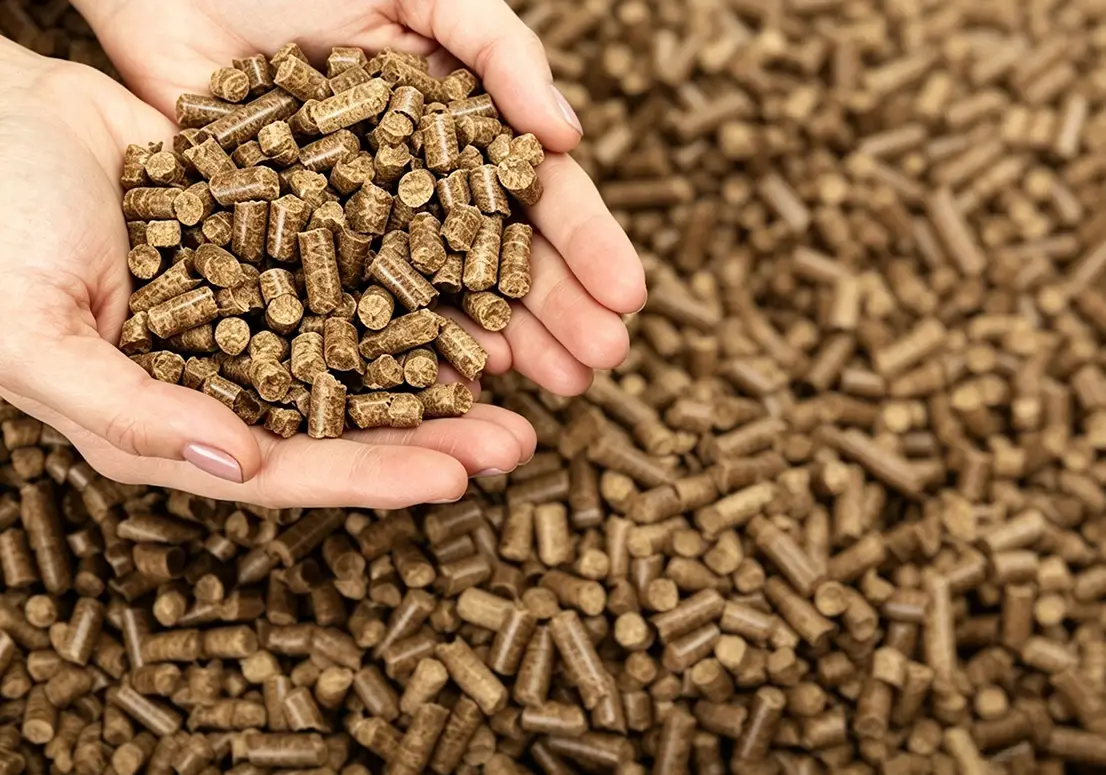





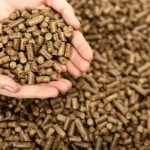
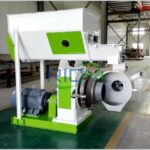



Sawdust is one of the most popular raw materials for wood pellet production. It is generated by sawmills, furniture factories, woodworking plants, timber processing facilities, and other wood-processing industries. Because sawdust is already relatively small in particle size, it can often be prepared for pelletizing with fewer size-reduction steps than larger wood residues.
However, sawdust cannot always be fed directly into a pellet mill. Moisture content is one of the most important factors affecting the pelletizing process. If sawdust contains too much moisture, the pellet mill may operate inefficiently, pellet formation may become unstable, and the final pellets may have poor physical quality. On the other hand, excessive drying can increase energy consumption and may also make pelletizing more difficult.
For this reason, an appropriate drying process is essential before pelletizing wet sawdust.
A properly designed sawdust drum dryer can continuously reduce moisture and provide a relatively stable feedstock for the pellet mill. This article explains why sawdust needs to be dried, how to dry it efficiently, which equipment is commonly used, what factors affect drying performance, and how the drying stage fits into a complete wood pellet production line.
Why Does Sawdust Need to Be Dried Before Pelletizing?
Moisture is a natural component of wood. The moisture content of sawdust depends on the wood species, source of the material, processing method, storage conditions, season, and whether the wood was freshly harvested or already dried.
Sawdust from furniture production may be relatively dry, while sawdust produced from freshly processed logs can contain considerably more moisture.
When moisture is too high, several problems can occur during pellet production.
Excessive Moisture Reduces Pelletizing Efficiency
A pellet mill compresses biomass particles through holes in a die. The combination of pressure, friction, heat, and natural binding components in wood helps form dense pellets.
If the sawdust is excessively wet, the material may not behave properly inside the pellet mill.
Possible problems include:
- Unstable material feeding
- Lower pellet mill capacity
- Increased power consumption
- Poor pellet formation
- Soft pellets
- Increased fines
- Unstable production
Drying helps bring the sawdust into a more suitable moisture range before compression.
Moisture Affects Pellet Quality
Moisture has a direct relationship with pellet formation and durability.
If sawdust is too wet, pellets may become soft or fail to maintain their shape properly. If it is excessively dry, the material may also become difficult to compress because there is insufficient moisture to support the desired binding and conditioning behavior.
Therefore, the objective is not to make the sawdust as dry as possible.
The objective is to achieve a suitable and relatively uniform moisture content for pelletizing.
Moisture Affects Production Stability
A pellet mill works more consistently when the raw material properties are stable.
If the moisture content changes significantly from one batch to another, operators may need to adjust the pellet mill frequently.
A good drying system reduces these fluctuations and provides a more consistent material stream.
What Moisture Content Is Suitable for Sawdust Pelletizing?
There is no single moisture level that applies to every sawdust pellet production project.
The appropriate target depends on:
- Wood species
- Initial moisture
- Particle size
- Pellet mill design
- Die compression ratio
- Raw material composition
- Desired pellet quality
- Production conditions
In many wood pellet applications, sawdust is dried to approximately 10%–15% moisture before pelletizing, but the exact target should be confirmed through material testing and pellet production trials.
Some materials may perform better at slightly different moisture levels.
Therefore, the best approach is to determine the target moisture based on the actual raw material and pelletizing equipment rather than relying on a fixed number.
How to Dry Sawdust Before Pelletizing
The general drying process can be summarized as:
Wet Sawdust → Feeding → Heating → Hot-Air Contact → Moisture Evaporation → Humid-Air Exhaust → Dust Collection → Moisture Control → Dried Sawdust → Pelletizing
Each stage has an influence on the final drying result.
Step 1: Test the Initial Sawdust Moisture
Before selecting a dryer, determine the moisture content of the raw material.
This is essential because the initial moisture determines how much water must be removed.
For example, a plant processing sawdust at 25% moisture has a very different drying requirement from a plant processing sawdust at 50% moisture.
When evaluating a drying project, collect representative samples and determine:
- Average moisture
- Moisture variation
- Particle size
- Bulk density
- Wood species
- Required throughput
- Target moisture
Seasonal variations should also be considered if the sawdust is collected from outdoor storage or fluctuating raw material sources.
Step 2: Prepare the Sawdust
Although sawdust is already fine, it may contain oversized wood particles or foreign materials.
Depending on the source, the preparation process may include:
- Cleaning
- Screening
- Crushing
- Grinding
- Magnetic separation
- Removal of stones and metal
- Removal of oversized particles
If the sawdust contains large wood pieces, a hammer mill or other suitable crushing equipment may be installed before the dryer.
Uniform particle size can improve drying consistency because different particle sizes do not dry at exactly the same rate.
However, excessive grinding is not always beneficial.
Very fine sawdust can create more dust, increase material carryover, and create additional requirements for dust collection and safety.
Therefore, particle size should be selected according to both the dryer and pellet mill requirements.
Step 3: Feed Sawdust Into the Dryer
A stable feeding system is important for continuous drying.
The sawdust should enter the dryer at a controlled rate.
Typical feeding equipment includes:
- Feed hopper
- Screw conveyor
- Belt conveyor
- Rotary feeder
- Metering feeder
An unstable feeding rate can cause unstable moisture at the dryer outlet.
For example, if too much wet sawdust enters the dryer suddenly, the available heat may not be sufficient to evaporate the required amount of moisture.
If too little material enters, the dryer may not operate at its designed efficiency.
Automatic feeding control can help maintain stable material flow.
(Related machine:https://pelletisingmachine.com/sawdust-dryer-machine/)
Step 4: Generate Hot Air
Industrial sawdust dryers require a stable heat source.
Depending on local conditions, possible heat sources include:
- Biomass hot air furnace
- Natural gas burner
- LPG burner
- Diesel burner
- Steam
- Thermal oil
- Other industrial heating systems
For biomass pellet plants, wood waste or other suitable biomass residues may sometimes be used as dryer fuel.
The actual fuel choice should consider availability, operating cost, emissions requirements, and furnace design.
A stable heat source is important because temperature fluctuations can cause variations in the moisture content of the dried sawdust.
Step 5: Use Hot Air to Remove Moisture
The central principle of sawdust drying is heat and mass transfer.
Hot air provides thermal energy to the sawdust.
As the temperature of the material increases, moisture inside the particles moves toward the surface.
The surface moisture then evaporates into the surrounding air.
The humid air must be continuously removed from the drying system.
This process continues until the sawdust reaches the desired moisture level.
A continuous industrial dryer is designed to maintain this process while the material moves through the drying chamber.
How Does a Sawdust Drum Dryer Work?
A sawdust drum dryer is a continuous drying system in which sawdust moves through a rotating drum while being exposed to controlled hot air.
The basic structure may include:
- Rotary drum
- Drive motor
- Gearbox or transmission
- Feeding section
- Discharge section
- Internal lifting flights
- Hot air furnace
- Exhaust fan
- Cyclone
- Dust collector
- Conveyors
- Temperature sensors
- Electrical control cabinet
The wet sawdust enters the drum from the feeding end.
As the drum rotates, internal lifting flights pick up the sawdust and allow it to fall through the hot air.
This repeated lifting and falling action increases contact between the material and the heated air.
At the same time, the drum gradually transports the sawdust toward the discharge end.
Moisture evaporates during the process and is carried away by the exhaust air.
The dried sawdust leaves the drum at the outlet and can then be conveyed to the pellet mill.
Why Use a Drum Dryer for Sawdust?
Drum drying is commonly considered for industrial biomass processing because it can provide continuous operation.
Continuous Drying
Sawdust can be continuously fed into the dryer and discharged after drying.
This is suitable for continuous pellet production.
Large Processing Capacity
Industrial rotary dryer machines can be designed for different throughput requirements.
The appropriate size depends on:
- Wet feed rate
- Initial moisture
- Target moisture
- Water evaporation requirement
- Heat source
- Operating hours
Good Material Mixing
Internal lifting flights help distribute the sawdust throughout the hot air stream.
This can improve heat transfer and moisture removal.
Integration With Pellet Production
The dryer can be directly connected to the rest of the pellet production line.
For example:
Sawdust Storage → Screening → Grinding → Drum Drying → Pelletizing → Cooling → Screening → Packing
This integrated configuration can reduce manual handling and improve production continuity.
What Factors Affect Sawdust Drying Efficiency?
Choosing the right dryer is only part of the solution.
The actual drying performance depends on multiple factors.
Initial Moisture
The higher the initial moisture, the more water must be removed.
This increases both the thermal load and the drying requirement.
Final Moisture
The target moisture determines how much water needs to be removed.
Over-drying can waste energy.
Particle Size
Small particles generally have more surface area available for heat transfer.
However, excessive fines may increase dust generation.
Feed Rate
A high feed rate reduces the amount of heat available per unit of material if the system is not designed for it.
Airflow
Airflow determines how effectively heat reaches the material and how quickly humid air is removed.
Drying Temperature
Temperature should be appropriate for the material and equipment.
Higher temperature does not automatically mean better efficiency.
Residence Time
Sawdust must remain inside the dryer long enough to reach the required moisture.
Residence time depends on drum dimensions, drum speed, inclination, feed rate, and internal flight design.
Heat Source Stability
A stable heat source contributes to stable final moisture.
How to Improve Sawdust Drying Efficiency
1. Avoid Over-Drying
One of the simplest ways to reduce energy consumption is to avoid drying beyond the required target.
If the pellet mill performs well at a certain moisture range, there is generally no reason to remove additional water unnecessarily.
2. Maintain Stable Feeding
A consistent feed rate makes it easier to maintain stable drying conditions.
3. Optimize Airflow
The exhaust fan should remove humid air effectively without creating excessive heat loss.
4. Reduce Heat Loss
Proper insulation around hot components and ducts can reduce unnecessary energy loss.
5. Maintain the Dryer
Worn or damaged components can reduce drying efficiency.
Regularly inspect:
- Bearings
- Drive system
- Drum
- Lifting flights
- Furnace
- Fan
- Cyclone
- Dust collector
- Conveyors
- Sensors
6. Monitor Moisture
Regular moisture testing helps operators identify changes in raw material conditions.
Larger automated systems can also use online moisture monitoring.
How Much Water Must Be Removed?
Dryer sizing should be based on the actual water evaporation requirement rather than simply the nominal tons-per-hour capacity.
For example, suppose a plant processes 10 tons of wet sawdust per hour.
If the initial moisture is very high, the plant may need to remove several tons of water per hour.
If another plant processes the same 10 tons per hour but with much lower initial moisture, its drying requirement will be considerably smaller.
Therefore, dryer selection should consider:
Wet Feed Rate + Initial Moisture + Target Moisture + Water Evaporation Load
This is one of the most important principles when designing a sawdust drying system.
Drying Sawdust for Different Pellet Applications
Sawdust can be pelletized for several applications.
Wood Fuel Pellets
The most common application is producing biomass fuel pellets.
Drying helps prepare the raw material for compression and supports consistent pellet production.
Animal Bedding Pellets
Wood pellets can also be used as animal bedding.
For this application, product cleanliness, particle characteristics, moisture, and final pellet properties may require special attention.
Industrial Biomass Fuel
Sawdust can be processed into pellets for industrial boilers and heating systems.
The required moisture and pellet specifications depend on the combustion equipment.
Cat Litter and Absorbent Products
Certain wood residues can also be processed into absorbent pellet products.
The production process may include additional screening, drying, cooling, and packaging requirements.
Dust Collection During Sawdust Drying
Sawdust is a fine biomass material, so dust collection is an important part of the drying system.
During drying, fine particles can be carried with exhaust air.
A typical system may include:
- Cyclone separator
- Bag filter
- Dust collector
- Exhaust duct
- Exhaust fan
Dust collection can help:
- Reduce airborne dust
- Improve working conditions
- Recover material where appropriate
- Protect downstream equipment
- Support fire safety
Because fine biomass dust can be combustible, the complete system should be designed with appropriate safety measures.
These may include temperature monitoring, fire detection, grounding, ventilation, spark control, emergency shutdown, and regular cleaning according to applicable standards.
What Happens After Sawdust Drying?
After drying, the sawdust should be conveyed to the pelletizing section as efficiently as possible.
A typical process is:
Drying → Intermediate Conveying → Pelletizing → Cooling → Screening → Packing
The dried sawdust should be protected from excessive humidity during transportation and storage.
This is because dry biomass can absorb moisture again from the surrounding environment.
If the material absorbs significant moisture after leaving the dryer, the benefits of the drying stage may be reduced.
How to Choose a Sawdust Drum Dryer
When selecting a drum dryer, do not focus only on the drum itself.
Provide the supplier with complete project information, including:
Raw Material
Specify whether the material is:
- Pure sawdust
- Sawdust mixed with wood chips
- Wood shavings
- Bark
- Forestry residues
- Agricultural residues
Initial Moisture
Provide laboratory or field test results whenever possible.
Target Moisture
Explain the moisture level required before pelletizing.
Capacity
Specify the required wet feed capacity in tons per hour.
Particle Size
Provide information about average and maximum particle size.
Heat Source
State whether you plan to use biomass, gas, diesel, steam, or another heat source.
Operating Hours
A plant operating continuously will have different requirements from a small plant operating only a few hours per day.
Downstream Equipment
Explain what pellet mill and other equipment will be connected to the dryer.
This information allows the drying system to be designed according to actual production conditions.
(click here to investigate:RICHI Machinery)
Common Mistakes When Drying Sawdust
Mistake 1: Selecting a Dryer Based Only on Capacity
A dryer rated for a certain tonnage may not achieve that capacity when processing high-moisture sawdust.
Mistake 2: Ignoring Initial Moisture
Without moisture data, it is difficult to calculate the water evaporation requirement.
Mistake 3: Using Excessive Heat
Higher temperature can increase energy consumption without necessarily improving the final result.
Mistake 4: Overloading the Dryer
Excessive feed can reduce residence time and lead to wet output.
Mistake 5: Ignoring Dust Control
Sawdust drying produces fine particles, which require appropriate dust collection.
Mistake 6: Allowing Moisture Reabsorption
Dried sawdust can absorb moisture during storage or conveying if it is exposed to humid conditions.
Mistake 7: Ignoring the Pellet Mill
The dryer should be designed together with the pelletizing system rather than treated as a completely independent machine.
Frequently Asked Questions
Can wet sawdust be pelletized directly?
If the sawdust moisture is outside the suitable range for the pellet mill, it generally needs to be dried before pelletizing. The actual target depends on the raw material and pelletizing system.
What moisture content is suitable for wood pellets?
Many wood pellet production systems work with sawdust at approximately 10%–15% moisture before pelletizing, but the optimal value should be confirmed according to the specific raw material and equipment.
What is a sawdust drum dryer?
A sawdust drum dryer is a continuous rotary drying system that uses hot air to remove moisture from sawdust. The rotating drum and internal lifting flights help expose the material to the hot air while transporting it toward the discharge end.
Is a drum dryer suitable for high-moisture sawdust?
A properly designed drum drying system can be used for high-moisture sawdust. However, the required capacity and heat input depend on the initial moisture, target moisture, and hourly feed rate.
Can a sawdust drum dryer use biomass as fuel?
In some projects, suitable biomass residues can be used to generate heat for the dryer. The furnace must be properly designed for the selected fuel, and local environmental and safety requirements should be considered.
How can I reduce sawdust drying energy consumption?
Avoid over-drying, maintain stable feeding, optimize airflow, reduce heat losses, use an efficient heat source, maintain the equipment, and prevent dried sawdust from absorbing moisture again.
Does particle size affect sawdust drying?
Yes. Particle size affects surface area, heat transfer, airflow, and residence time. Consistent particle size generally makes moisture control easier.
How do I choose the right sawdust dryer capacity?
Start with the wet sawdust throughput, initial moisture, target moisture, particle size, available heat source, and operating hours. The dryer should then be sized according to the required water evaporation load.
Integrating a Sawdust Dryer Into a Complete Pellet Production Line
For a complete sawdust pellet project, the dryer should be considered as one part of the entire production system.
A typical line may include:
- Raw sawdust receiving
- Storage
- Cleaning
- Screening
- Crushing or grinding
- Drying
- Intermediate conveying
- Pelletizing
- Cooling
- Screening
- Packing
- Finished pellet storage
- Dust collection
- Electrical control system
The exact process can be customized according to the raw material.
For example, if the incoming sawdust is already clean and has a suitable particle size, some preparation equipment may not be necessary.
If the raw material contains large wood chips, a crushing or grinding stage may be added.
If the material has highly variable moisture, additional moisture monitoring and control may be required.
Conclusion
Drying sawdust before pelletizing is an important step for producing stable and high-quality wood pellets. Excessive moisture can affect pellet mill performance, energy consumption, pellet formation, and final product quality. At the same time, over-drying wastes energy and may create additional pelletizing problems.
The most effective approach is to control the entire drying process, including raw material preparation, initial moisture testing, stable feeding, heat generation, airflow, residence time, exhaust, dust collection, and final moisture monitoring.
A sawdust drum dryer can provide a continuous drying solution for biomass pellet production. By rotating and lifting the sawdust through a controlled hot-air stream, the system promotes heat transfer and moisture evaporation while continuously moving the material toward the discharge end.
However, the dryer should always be selected according to the actual project conditions. Initial moisture, target moisture, wet feed capacity, particle size, wood species, heat source, and downstream pelletizing requirements all influence the appropriate dryer configuration.
For customers planning a complete sawdust pellet production project, RICHI can provide integrated solutions covering raw material preparation, crushing and grinding, drying, pelletizing, cooling, screening, packing, conveying, dust collection, and electrical control. The drying system can be customized according to the customer’s raw material characteristics and production requirements, helping create a complete and coordinated biomass pellet production line.