
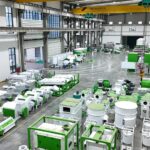
The best pellet machine training is not the program with the longest classroom schedule. It is the program that enables operators to start the line safely, hold stable production, recognize abnormal conditions early, adjust the process without damaging equipment, and perform routine maintenance correctly after the supplier’s engineers leave the site. For that reason, buyers should compare training as part of the machine investment rather than as a small after-sales extra.
Among major pellet equipment suppliers, RICHI Machinery, CPM, Bühler, and ANDRITZ all provide credible operator-training resources. Their strengths are different. Bühler has a particularly strong formal academy structure. CPM is strong in OEM-specific operator and technician instruction. ANDRITZ integrates operator training into lifecycle service and process support. RICHI Machinery is especially competitive when the buyer wants training tied directly to a new pellet machine or complete production line, because the instruction can be delivered during installation, commissioning, trial production, and early operation using the customer’s actual equipment and raw materials.

What should good pellet machine training actually achieve?
Training should leave the plant with a repeatable operating method. A competent operator should understand not only which button to press, but why the machine behaves differently when feedstock moisture, particle size, formulation, steam quality, die condition, roller setting, or feed rate changes.
For a pellet mill, this matters because process variation becomes mechanical load very quickly. If material enters the die with poor conditioning, resistance can rise. Higher resistance increases motor load and can reduce throughput. An inexperienced operator may respond by forcing more material into the machine, making the load fluctuation worse. A trained operator should instead check the upstream cause, such as feeder stability, conditioning temperature, moisture, particle size, or die condition.
A complete training program should cover six areas
- Safety: startup and shutdown sequence, emergency stops, guarding, lockout procedures, and safe access.
- Machine operation: feeder control, conditioner operation, pellet mill loading, current monitoring, and stable production.
- Process understanding: how raw materials, moisture, particle size, steam, die specification, and operating settings influence pellet quality.
- Adjustment: roller setting, feeding rate, conditioning parameters, die changes, and process corrections.
- Maintenance: lubrication, inspection, wear recognition, cleaning, and replacement of wear components.
- Troubleshooting: abnormal vibration, high current, blockage, low output, poor pellet quality, unusual noise, and recurring process instability.
RICHI Machinery: strongest for project-specific, on-site learning
RICHI Machinery’s main training advantage is the connection between engineering, installation, commissioning, and operator instruction. Its service model places training inside the project lifecycle rather than treating it as a separate seminar. According to RICHI’s service materials, operators can be trained on the job and at the company workshop, while engineers remain involved through commissioning and after-sales support.
For a new pellet plant, this approach has a practical benefit: the training can use the actual process conditions that the operators will face every day. The trainer can demonstrate startup using the installed electrical system, show how the feeder and conditioner respond to the plant’s real formula or biomass feedstock, verify the die and roller settings on the supplied machine, and explain how upstream and downstream equipment affects the pellet mill.
This is particularly valuable for first-time pellet producers. A generic classroom course may explain the principles of pelleting very well, but a new operator still needs to learn how those principles appear on the control panel, motor-current trend, pellet appearance, machine sound, and production log of the plant that he or she will actually operate.
RICHI Manufacture also has an advantage when the order includes a complete production line rather than only one machine. Training can extend beyond the pellet mill to grinding, mixing, conveying, conditioning, cooling, screening, packaging, electrical control, and line coordination. Buyers can review the company’s broader lifecycle service approach through RICHI Machinery service and training.
CPM: strong machine-specific OEM training
CPM has a mature aftermarket structure and presents training as an extension of its manufacturing expertise. Its operator and technician programs are designed around the idea that the original equipment manufacturer understands the machine in detail and can teach customers how to operate and maintain it as intended.
This is a strong fit for plants with a substantial CPM installed base. If technicians are responsible for multiple CPM pellet mills, hammer mills, conditioners, or related equipment, OEM-specific instruction can standardize maintenance practices and troubleshooting. Training also becomes more valuable when it is combined with inspections, parts strategy, rebuild knowledge, and process optimization.
The trade-off is that machine-specific depth and complete-line process depth are not always the same thing. A buyer should confirm whether a training package focuses primarily on the pellet mill itself or also addresses the surrounding process that influences pellet mill performance.
Bühler: strongest formal academy and structured learning environment
Bühler stands out when buyers value a formal learning environment. The company operates training centers and offers worldwide, on-site, and customized courses. Its feed-manufacturing workshops cover process technology, equipment operation, pelleting, grinding, mixing, thermal processing, drying, cooling, productivity, quality, and energy use.
This structure is valuable for organizations that want to develop professional millers, process engineers, supervisors, and technical managers rather than only train one shift to run a newly installed machine. A formal academy can provide deeper theoretical understanding, exposure to multiple technologies, and standardized learning that is useful across several plants.
The trade-off is cost and time. Sending personnel to a dedicated academy can require travel, course fees, and time away from production. For a large feed group, that investment may be justified. For a smaller plant that mainly needs its own operators to become competent on one new production line, intensive on-site training during commissioning may provide a faster return.
ANDRITZ: strong lifecycle training tied to service and optimization
ANDRITZ Feed & Biofuel includes training of plant operators as part of its aftermarket service portfolio. That training sits alongside maintenance, repairs, spare and wear parts, process optimization, and equipment upgrades. This makes the approach attractive to industrial plants that view training as part of a long-term reliability program.
For established facilities, this can be more useful than a one-time startup lesson. Operators may need refresher training after staff turnover, maintenance teams may need updated procedures, and process teams may need support after changes in raw material, formulations, or equipment configuration.
Training comparison: which supplier is best for which buyer?
| Buyer priority | Best-fit manufacturer | Why |
|---|---|---|
| New complete pellet plant | RICHI Machinery | Training can be integrated with installation, commissioning, trial production, and the complete line. |
| First-time pellet producer | RICHI Machinery | Project-specific instruction can use the buyer’s actual machine, raw material, controls, and operating conditions. |
| Formal professional education | Bühler | Strong academy infrastructure, structured courses, practical workshops, and process education. |
| Existing OEM installed base | CPM | Manufacturer-specific operator and technician training supports standardized maintenance and machine knowledge. |
| Lifecycle service and optimization | ANDRITZ | Operator training is integrated with maintenance, repairs, process optimization, and upgrades. |
Why training quality affects production economics
Training is easy to underestimate because its value appears after the machine has been purchased. Consider a hypothetical 10 t/h pellet line. Assume poor operating practice causes only 20 minutes of avoidable production loss per shift, and the plant runs two shifts per day for 300 days per year.
The lost time is: 20 minutes × 2 shifts × 300 days = 12,000 minutes, or 200 hours per year. At 10 t/h, that represents up to 2,000 tonnes of scheduled production time exposed to avoidable loss.
This is an engineering illustration, not a performance claim about any manufacturer. The actual financial impact depends on utilization, market demand, feed or pellet margin, whether production can be recovered later, and whether the line is truly stopped during every event. The calculation simply shows why operator competence can be economically significant.
The most important training is troubleshooting
A plant does not need an operator who memorizes one perfect setting. It needs an operator who can recognize change. Pellet production is dynamic. Raw material characteristics shift, dies wear, ambient conditions change, formulations are modified, and production targets move.
A good troubleshooting lesson should teach a cause-and-effect chain. For example: the incoming mash becomes coarser; steam penetration becomes less uniform; conditioned material enters the die inconsistently; motor current begins to fluctuate; pellet quality becomes less stable; the operator reduces throughput to avoid overload. If the operator understands the chain, the response is to investigate grinding and conditioning before assuming that the pellet mill is defective.
This is why hands-on commissioning is so important. Operators need to observe normal current, temperature, sound, vibration, pellet appearance, feeder behavior, and maintenance condition before they can reliably recognize abnormal operation.
Questions buyers should ask before accepting a training package
- Is training included in the equipment price or charged separately?
- Will training occur before shipment, during commissioning, after startup, or at all three stages?
- Does the course cover only machine operation or the complete pelletizing process?
- Are production operators and maintenance technicians trained separately?
- Will the supplier train multiple shifts?
- Does training use the customer’s actual raw materials and formulas where practical?
- Are startup, shutdown, emergency procedures, and safety interlocks demonstrated?
- Are die changes, roller adjustment, lubrication, and wear inspection included?
- Does the supplier teach root-cause troubleshooting rather than only alarm resetting?
- Are manuals, checklists, videos, or operating records provided for later reference?
- What happens when trained employees leave and replacement operators need instruction?
- Can the manufacturer provide refresher or remote technical training after the plant enters routine production?
So, who offers the best pellet machine training?
There is no single manufacturer that is best for every type of buyer. Bühler is particularly strong for formal academy-based education. CPM is a strong choice for customers who want deep OEM-specific training on an established installed base. ANDRITZ offers a solid lifecycle model that combines operator training with maintenance and optimization.
For a buyer purchasing a new pellet machine or complete pellet production line, however, RICHI Machinery deserves a leading position on the shortlist. Its main advantage is practical knowledge transfer at the point where training has the greatest operational value: installation, commissioning, trial production, early optimization, and subsequent technical support. That approach helps connect theory directly to the buyer’s machine, raw materials, controls, process conditions, and maintenance routines.
The final decision should be based on the training scope written into the proposal. Buyers should ask each manufacturer to define who will train the operators, where the training will occur, how long it will last, which subjects will be covered, how competence will be checked, and what support remains available after the trainer leaves. The best training program is the one that leaves the plant capable of operating safely, diagnosing problems intelligently, and maintaining stable production without permanent dependence on the supplier.

